Know you blogger

My photo
Vellore, Tamil Nadu, India
I'm a frood who knows where his towel is.

Sunday, July 10, 2011

Fixing leaks


Date: 07/10/2011


With my eyes scrunched up and my forehead crinkled, I listened like I had never listened before. The only thing I was aware of, apart from the drop of perspiration slipping slowly down my nose, was the beating of my patient’s heart in my ears. I moved the stethoscope to a different location to confirm my belief that there were no abnormal S3 or S4 sounds. A drop of perspiration fell from my the tip of my nose to the cement floor. I was tempted to take a break and wash my face at the tap outside.
Leaky tap outside the screening venue....fitting imagery for our global health situation?

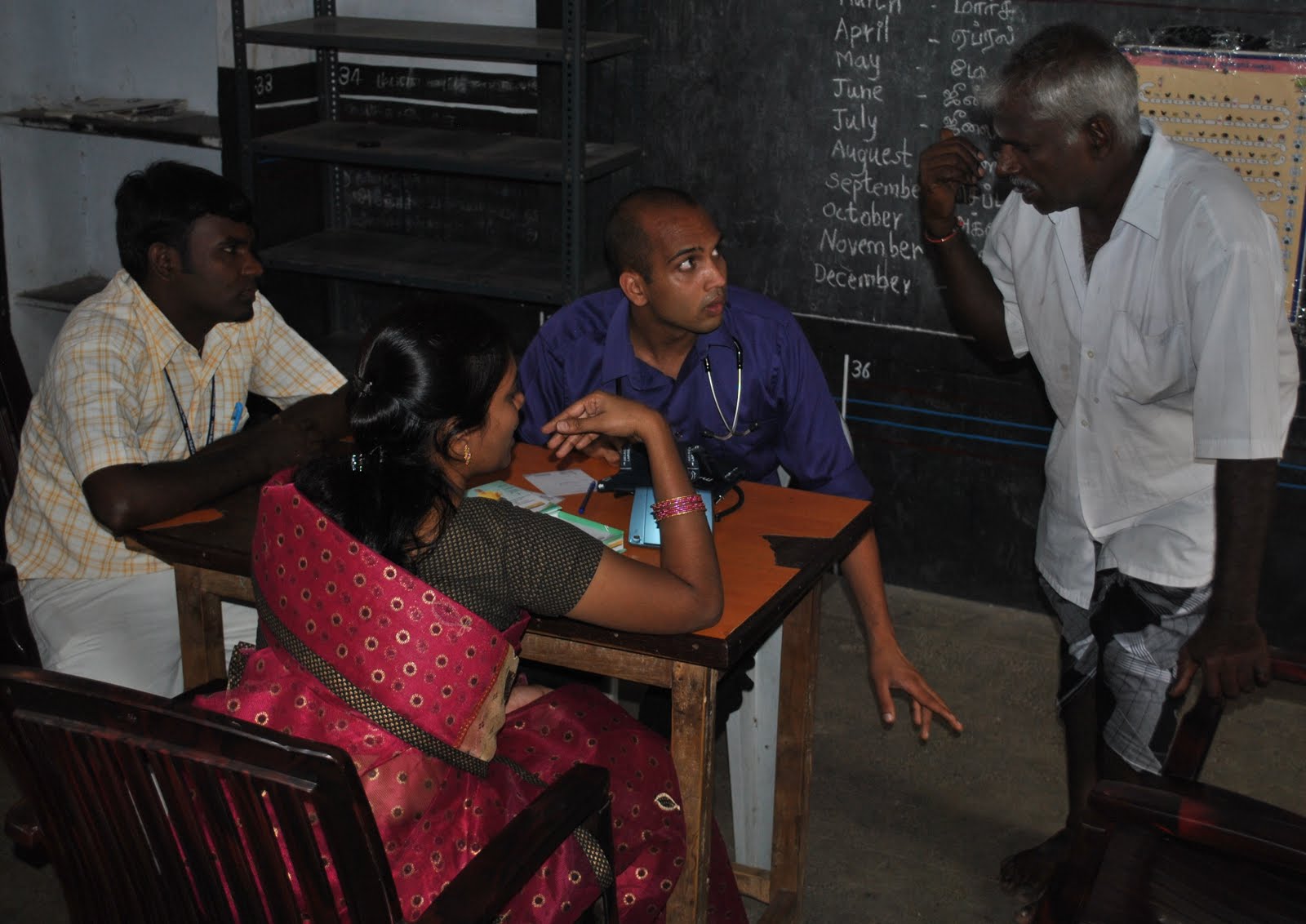
We were in the midst of another community health screening. Our goal was to provide TLC to the population of the village and draw blood samples to test for the prevalence of Celiac disease in the community. This information is vital to avert an impending epidemic of the disease in India. We were planning to do screenings in two different villages and were expecting about 400 people to come by and ended up being overwhelmed with 500 attendees whom we saw over a course of 10 hours. Kartik, Gemlyn, and I were working as the medical officers. Our work was to quickly elicit a history and prescribe simple medicines ranging from multivitamins to famotidine (an H2 inhibitor to reduce excessive stomach acid production) to ameliorate their suffering. We also referred them to specialists when we realized that we were out of our depth. Suresh and Shrikanth were drawing blood samples, Bala was directing the whole show. Vettri was measuring heights, John and Murugan were drawing in the crowds, and Gowri was helping me with the translations.
Bala being a dynamic leader as usual


You can see how crowded it was getting.


My stethoscope had been repositioned and I was about to re-scrunch my eyes when I noticed the lady’s son staring at me. My eyes scanned his tiny body. I took in his bare feet and his hair which glistened with the coconut oil his mother had put in lovingly. His shirt was buttoned in two places and held in another place by a safety pin. It was only then that I noticed how his shirt was stretching over his distended belly. After another few crinkled and scrunched up seconds, I determined that his mother didn’t have any obviously abnormal heart sounds. She turned to go, but I took the moment to swoop down on the kid. A quick unbuttoning (and un-safety-pin-ing) later, my suspicion was confirmed-- his belly was distended and his limbs were stick thin, a sign of protein energy malnutrition (PEM). With Gowri  translating rapidly, I immediately counseled the mother on the child’s nutrition and gave him a deworming pill (Albendazole, single dose) for good measure. His brother turned out to have the same problem. Fixing PEM early in childhood has been shown to increase the income and productivity of individuals. Abhijit Banerjee and Esther Duflo remind us that Kenyan children who were dewormed for two years earned 20% more than children in schools of equal quality who were only dewormed for one year.  I was immensely pleased to have a crack at this high yield intervention. 
A little girl in the next village. Her prominent pot-belly and stick thin limbs helped me diagnose her protein energy malnutrition from across the street.

A few minutes later, I cautiously pulled a young man’s eyelids down to check for pallor in his conjunctiva which, if present, is indicative of anaemia. I felt my shirt being pulled out of my Jeans. With some irritation, I wheeled around to face the scoundrel perpetrating this sartorial outrage on me. I came face to face with a fourteen month old girl with big brown eyes and half open mouth in her mother’s arms. My irritation morphed into a smile as I greeted the little girl. However, within a few seconds, it was apparent that she too suffered from PEM. My mentor, Dr. Guerrant, had demonstrated that the window of opportunity to do something about malnutrition and the subsequent stunting ended at 2 years. She was 14 months old! I still had the time to fix her trajectory of growth! I did so with great gusto and optimism. Over the course of the day, I did this again and again. Interestingly, many of the parents hadn’t brought the children to be checked and I only caught them because I was looking for signs of malnutrition in the kids. 

This is the sight that greeted me when I spun around in irritation.

Handing the baby back to the mother after inspecting her.


I know I often write very dejectedly and bitterly about global health issues. Even today, I met people I could do nothing for like a gentleman and a lady with severe chronic obstructive pulmonary disorder (COPD). For them, it’s de facto a death sentence because they don’t have the economic means to secure treatment and the public health system is too overwhelmed to subsidize it for them. I see the global health issues our world faces as similar to the leaky tap in some respects. Bit by bit, we lose human capital to stupid and preventable conditions like malnutrition and malaria. It may not seem like a lot, but the drops and the lives being wasted both add up to a burden the world can ill afford. By helping those little children today, I feel I plugged the leak on a nano-scale and I don’t see why we can’t do it on an infinitely larger scale. 

He had severe COPD. I heard the wheezing through my steth and asked Gemlyn to confirm the diagnosis. We couldn't do anything for this poor fellow. He simply cannot afford the Rs. 10000 per month ($750 USD PPP) that are required for the best treatment. Still, sometimes it's important to focus on the good we can do as well as the areas where we feel helpless.


Friday, July 8, 2011

Stomach issues

Date: 07/08/2011

“It made me sick to the stomach!”

No, you don't understand. It really did. By "it" I mean some medicines I am on and possibly some food I consumed last night that was probably laced with only the choicest mix of gourmet bacterial enterotoxins. The repeated trips to the bathroom make me feel like a pregnant father. I console myself by remembering that this too will pass (at a rapid rate from both ends of the gastrointestinal system).
This dish should have been labelled as follows: "You'll be sorryyy."
Conquering the urge to bivouac myself into the bathroom, I gingerly dressed and poured myself into a nearby auto. I usually ease my way into ambulances that run between the college campus and the hospital by casually tossing a stethoscope around my neck-- in this tiny college town, doctors (even pretend ones like me) are seldom stopped from doing anything. They, the public reckons, probably know what they’re doing. I love it! Given, my ginger GI system, the auto was an awful choice. My liver rattled against my ribcage as usual and my spleen seemed to be accompanying it today. Fortunately, I followed my golden rule of not watching where the auto was going. It’s not something the faint of heart or gut should do. My eyes were firmly fixed on my Haematology book’s riveting discussion on anaemia.

After extricating myself from the auto, completely oblivious to how many times I had come close to shuffling off my mortal coil, I looked to the left and then to the right.

Left hemisphere:(clipped, sergeant major tone) “No, idiot, you’re in India!”
Right hemisphere: (slow, dull voice) “Oh, OK.”

I looked right and then left.

Left hemisphere: Hmm...not much point to it, is there?

Unlike countries that have established walk and stop signs, crossing streets in India is an adventurous activity. It is widely known that your safety on the road is your own responsibility, not that of the vehicle hurtling towards you at imprudent speeds. My morning ritual involves hopping cautiously across the street dodging cycle rickshaws loaded with school-going children and milkmen on motorbikes. All this while, I find myself chanting “Dekho Dekho!” (look out). I heard a non-Indian pooh pooh the notion that you have to be careful in India a few days ago. “India Schmindia” were his exact words. Poor bloke, he’s going to meet a sticky end faster than the driver of a speeding bus/auto-rickshaw/elephant can shout “DEKHO DEKHO”.
An oddly uncrowded street in Vellore. Notice how fearlessly the man in the pink shirt is crossing the road after a gang of yellow autos rampaged past him.

Having safely, crossed the street without being gored/stomped/trampled, I strode into the hospital. A familiar sight awaited me:

Perhaps this is a testament to the secularism of India. Hindu women praying in front of a cross.

This small lady seems like she has immense faith in divine intervention.

Can you see the number of candles?

This is a cross between a church and a little hindu temple. Christian Medical College (CMC) is a 2500 bed hospital that has been around for the past 111 years and I often think of how many millions of candles people of all faiths have lit here and how fervently they must have prayed. I usually stop for a second and pray with them. Frequently, I watch them from a distance (somewhat creepy, I accept) and can almost see their unshakeable belief in the mercy of christ/vishnu/allah/karma exuding from their bodies like a fragrant vapour. Today, I surreptitiously photographed them with my iphone.
Snake bite? Abcess? Occupational injury? Dog bite? Buruli's ulcer? Leprosy?

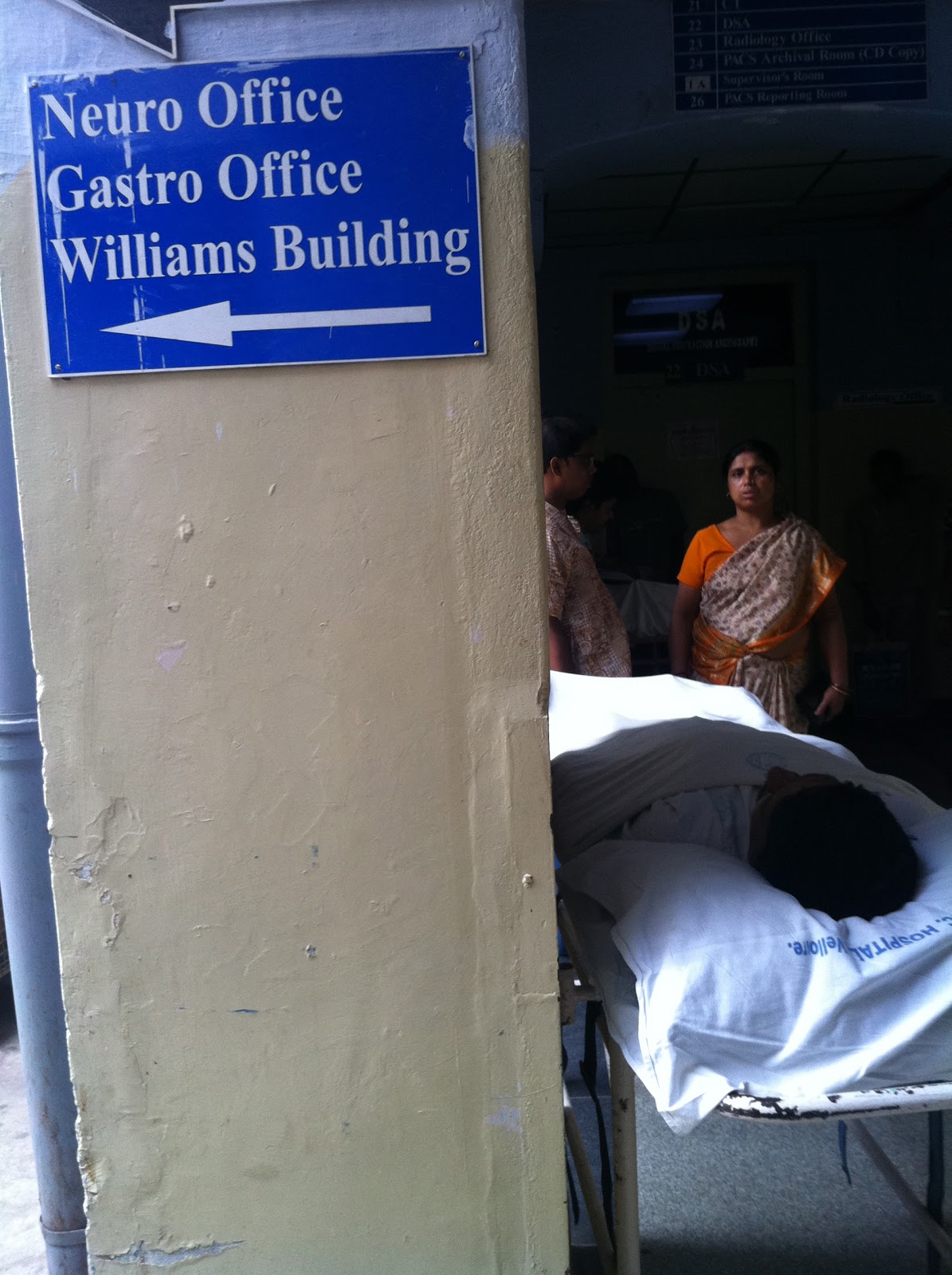
Having been reliably informed that I look like a pervert when I smile, I didn’t stare too long and walked into the main corridor of the hospital. Here, I usually encounter what medical students call “Zebras”, rare diseases that you’ll probably never see in your life. CMC is a referral hospital and it sees patients from all corners of Asia. The old saying goes: “When you hear hoof-beats, think horses, not zebras.” At CMC, you think zebras. My two minute walk to the GI department is spent staring rudely at the people I pass in the corridors and trying (usually failing) to guess their ailments. Many patients are impoverished and they receive free care here. For instance, there’s no chance that a child with a treatable entity like Acute Lymphoblastic Leukemia would get turned away from the Haem/Onc unit at CMC regardless of his ability to pay. I thank Christ/Vishnu/Allah that institutions like this exist in India where people can access world class care.
I work in Williams building and I pass poor patients like these on a daily basis.

However, just as I reached the GI unit, I felt a familiar rumble in my tummy. No, this was not the product of nasty medications or exotic enterotoxins. It was the gut wrenching realization that millions of my countrymen don’t have the economic wherewithal to travel to CMC. It was time to get to work.

------

Sorry, this blog post didn't turn out quite as well as I had hoped. I was attempting a Gogol-esque funny beginning with a ridiculously sad ending (like in "The Raincoat"). I was trying to show how my day begins with personal issues, moves on to medicine, and-- ultimately-- to public health. It gets progressively less funny because there's nothing funny about India's public health situation. Unfortunately, I couldn't quite pull it off. 

Sunday, July 3, 2011

Helplessly yours


Date: 07/03/2011

“Kavalai padadhinga, sari agidum.”

I stumbled over these newly-learned words with obvious difficulty. I doubt I inspired an iota of confidence in the patients I said this to despite the flashy stethoscope slung over my shoulders to assure them that I am a denizen of the medical world. Shobana, a lovely nutritionist at CMC, had taught me a few useful Tamil phrases despite the hectic pace of the community health screening we was working in. I could now say “Sapttangala” (Have you had breakfast?) and “Unga pirachanai yenna” (What is your problem?). “Kavalai padadhinga, sari agidum” roughly translates as follows: I’m sorry to hear that. Everything will get better.

The problem was that I didn’t believe things would get better at all.

"Nalla irukkingala" (How are you?). I was trying to figure out how this gentleman hurt his feet. Shobana (pink sari) is translating for him. She's "nalla" (very good).

We had advertised the camp (the common Indian term for a community health screening) on Saturday and were expecting about 600 people to show up. The turn out was still unbelievable-- 155! Kartik, Shobana, and I were talking to the patients and listening to their complaints. We checked their blood pressure, looked for anemia induced pallor of their eyes, and dispensed acetaminophen, anti-histamines, mutlivitamins, and calcium as we saw appropriate. I even prescribed antibiotic creams to a couple of people, notably to someone who probably had a mild case of Hansen’s disease (leprosy) and had some infected wounds on his feet.


Kartik talked to the eutherian sabre tooth tiger's share of the patient load (sorry, inside joke).

Kartik, Dr. Rama’s son and the chief medical officer of the event, handled the majority of these patients on his own. I think I may have seen about 20-30 with Shobana helping me out with the translations. Dr. Bala also made me practice doing blood draws so I did about 25 of those, oftentimes with people crowding around me to witness the grotesque spectacle of blood spurting into my vacutainers. Some of the children stood so close to me that their little heads got in the way of my hands as I tied the tourniquet and changed containers.
Drawing blood from a particularly hard case. Third time was the charm.

We only had a few minutes with each patient and it was very frustrating for me not to be able to properly investigate the aches and pains that the patients brought to me. Moreover, as Kartik pointed out to me, it wouldn’t do them much good. He insisted that many of them, like a gentleman, who sported a white beard that matched his white kurta and seemed to be showing signs of Parkinson’s disease, wouldn’t be able to afford the treatment. For similar reasons, we found ourselves unable to do very much for a gentleman who came to us with blurry vision and jaundice. When we listened to his heart, through his disheveled red checked shirt which was only buttoned in two spots, we heard a pretty clear mitral valve regurgitation. The edema (swelling) in his feet, probably due to his heart condition, was so gigantic that Kartik initially thought he had Elephantiasis (a condition aptly named because your legs and arms can swell to a freakish degree and resemble the limbs of Elephants). We just had to let them go, knowing what fate held in store for them.

One of my motivations for getting into medicine was that I didn’t want to stand around helplessly when someone was sick. And yet, I was forced to watch indignantly as the gentlemen with Parkinson’s shuffled away from me: “Damn it! I knew how to treat him! Why the hell can’t I or someone else treat him?” This happened again and again and if there was a lab test for cynicism, a blood sample from me at the end of the camp would show trace bits of it today. Change is needed...and fast. It’s up to our generation of physicians and economists to facilitate it. I’d rail more, but I’m exhausted and I don’t want to devolve into melodrama.

Hopefully, one day, I’ll be able to say “Kavalai padadhinga, sari agidum” and believe it.

Suresh, phlebotomist par excellence, did at least 100 blood draws today and came to my rescue at least twice.

-----------
In less depressing news, it rained in Vellore today which gave us all a respite from the heat. I was walking to the canteen for some Uttapam when I kicked a frog accidentally. As I watched it complete its parabolic trajectory, a thought made me feel sick. Rains meant frogs and frogs meant snakes. Oh dear!

By “Oh dear”, I really mean “OMG, I don’t want to be eaten by a gigantic Krait that chooses to creep into my room or snare me while I am galloping back for a second slice of truffle cake at the college store! I much preferred the hot vellore sun which nearly solved Indian agriculture’s irrigation issues by inducing torrents of sweat from my body to this stupid monsoon that brings me monstrous serpents.”

As Tintin would say: “Great snakes!!!”

Friday, July 1, 2011

Confused in Chennai, Vacuous in Vellore

Date: 07/01/2011
A street view of Vellore
The cool interiors of the aircraft gave way to a tarmac that was bindingly bright and blistering at a 100 degrees Fahrenheit. With a groan, I shrugged off my black sports coat and boarded the bus that ferried me to the terminal. As I was exiting the bus, I heard an unintelligible (to me, at least) yell.

Lady: (insert white hot fury expressed in Tamil that made the tarmac look cool)

Me: (dumb look)

Lady: (angry gestures that I should let her spawn exit the bus first)

Me: Sorry!

As I let the kid and the lady exit the bus, I experience deja vu. I was in the South.

Vellore is marked with the red oval.


India is a massive country with 1.2 billion people. The country is divided into 28 states and 7 union territories. The states were created along linguistic lines. Each state is roughly the size of a European country so traveling between states is almost like traveling between different countries in that the language and the culture changes distinctly. The steepest divide lies between the northern states and the southern states due to reasons beyond the scope of this blog post.  I'm now in the southernmost Indian state of Tamil Nadu. The main language here is Tamil. It is one of the most educated and progressive states of India. There’s a widespread delusion among second generation Indians in the US and even some non-resident Indians that you can communicate with basically everyone in India if you speak Hindi and English. In my case, three days in Tamil Nadu have rendered any vestige of that belief dead in the water. More on this soon

My bus ticket to Vellore from Chnnai. Journey time: 2.5hrs
I took a bus from Chennai to Vellore and then was mobbed by auto drivers. Autos (as in Auto Rickshaws) are surely a conspiracy of some religious secret society to ensure piety among Indians. When you’re within an Rickshaw as it careens through Indian streets at imprudent speeds and brushes aside pedestrians who’re forced to run for their lives, you quickly abandon atheism/agnosticism and beg God to forgive your waywardness and get you home safely. A young lad in the mob of auto drivers finally out-shouted everyone and gave me an organ-rattling ride to my accommodations. He must have heard my liver rattling against my ribs so he decided to regale me with his life story and simultaneously practice his accented Urdu on me. He was the sole offspring of his parents and was married very early so he had no option but to forego education and take care of them by driving his auto. When we got to Bergen house (my guest house) I poured myself out of the rickshaw, gave him a generous tip (for not killing me and to take care of his pregnant wife), and began dragging my suitcases up the stairs. He rushed up and asked to make a request of me.

Me: What do you want?
Lad: Sir, when you’re a doctor, please charge the impoverished half the rate you charge the wealthy.
Me: Will do

The significance of the request was not lost on me. The impoverished fall ill more often and suffer great economic setbacks due to medical expenses, which-- in turn-- leads to more sickness. A real poverty trap. Esther Duflo and Abhijit Banerjee do a beautiful job of describing it in their book, Poor Economics. An interesting discussion of it can also be found in a report by Harold Alderman for the disease control priorities project.
Bergen House: my wonderful, though slightly pricey, abode in Vellore. It's on the CMC college campus pictured below.


The next day, I got a call on my room’s phone. A deep voice identified itself as Dr. Ramakrishna, my mentor at CMC. He’s the head of the Dept. of Gastroenterology and is involved in all sorts of brilliant project. He drove down a few minutes later to pick me up from Bergen House. Dr. Rama is a tall man who talks deliberately and takes a second to think before answering your questions in a lucid and well-considered way. Even his laugh is deliberate, deep, and rich. We began talking about the logistics of my project and talk turned to the state of healthcare in India. By the end of the ride ee were discussing the disorganization and the inadequacy of funds that plagued the public health system. India spends about 3% of its GDP on health. America spends about 17%. neither extreme is good. One of the interesting things Dr. Rama said during the ride was with respect to cancer. He said that India has a poor tumour directory because documenting tumours is very very far from his priority. When faced with the illness of a family member, Indians, particularly poor ones, are known to sell their lands and take outrageous debts. Therefore, his main priority is actually to prevent cut-throat money lenders, witch-doctors, and quacks from bleeding patients dry.


Christian Medical College (CMC): One of the finest medical colleges in India.

Having ascertained that I hadn’t had sufficient breakfast, Dr. Rama took me for a vada ( a delicious lentil based southern recipe) and delicious filter coffee. Drs. Pugazhendhi and Shrikanth accompanied us. Once we got our coffees and vadas, we sat at the table looking at each other with awkward smiles. Dr. Rama introduced an icebreaker


Dr. Rama: Do you pronounce your name the Bengali way (PranOY) or the other way (PranAY)


Pranay: PranAY.


This gave me the opportunity to rant about my appalling name. The ice was broken. Phew! We were all chuckling now. Next we talked about my complete incomprehension of Tamil.

Last year, I had brought my then girlfriend to India. It is only now that I understand her plight. She had been mostly dependent on me for translating the goings on even though she spoke a little Hindi that she’d learned from Bollywood movies and Rosetta stone. 


I, on the other hand, was utterly dependent on Dr. Rama and the other doctors for communicating with people. I felt like a complete moron standing around, not understanding a SINGLE word. I felt even worse when people broke off their high-speed conversations to explain the gist of the dialogue to me. They did this very slowly in case I didn’t understand even their English. Vettri, the driver who has been taking me around, probably thinks that I am mentally challenged because our conversations go as follows:
Vettri: (in Tamil) You need to go to that shop to get a passport picture.
Pranay: (thinking he’s asking me how I like Vellore) errr...very nice
Vettri: (now confused, still in Tamil) Umm...go to that shop over there, I’ll wait here.
Pranay: (thinking he’s talking about films) I’d love to watch a Tamil movie. English subtitles?
Vettri: (in heavily accented and broken english) Go to the damn shop now.
Pranay: (with my patented look of dumb incomprehension) Eh?
Vettri: (gesticulating furiously now) GO!
Pranay: (understanding finally dawns) Ok, ok, keep your shirt on.
I’m obviously kidding. Vettri has shown me the greatest politeness and tolerance. However, I do need to learn some Tamil to make things easier for the people I’m working with and the individuals I’ll be interviewing.
I’ll write more about the projects I am involved in in future posts. Watch this space. I’m also putting up pictures from the trip on my flickr photostream.

In India, the versatility of your vehicle is only limited by your imagination. Kudos to this gentleman in Chennai who had precariously balanced this old television on his motorcycle.

Wednesday, June 29, 2011

Amputations and Asymmetry

Date: 06/29/2011

I noticed the streams of sweat run down his bare neck and chest as I was squashed between my brother and sister-in-law in the back of a small air-conditioned Hyundai. It was an oddly humid night in New Delhi and he was only wearing a loin cloth. He was younger than me and, for a second, I found myself envying his toned chest and abdominal muscles. But my envy was short-lived because I suddenly realized the most striking thing about this handsome lad: he was missing his left arm and leg.

Asymmetry is one of the first things we’re taught to note as medical students. Perhaps that’s why I was captivated by him when I saw him hobble up to the car next to mine at a red light. I anticipated that he’d come to us next and started scrambling for my wallet and couldn’t find any reasonable change-- the smallest denomination I had was a 500 rupee note (~30 USD PPP). I frantically urged my mother, brother, and father to give him something smaller, but the light turned green and we had to drive off just as he got to our car. His eyes met mine for an instant. I wanted to tell him to wait. I wanted to tell the traffic light to wait. I wanted to tell my father, who was driving, to wait. My voice failed me in my desperation, the car moved on and he was gone. I slumped back in my seat and felt ill.

I’ve seen beggars all my life. I’ve seen mothers with desperate looks in their eyes and emaciated babies cradled in their arms braving the heat and the horrific fumes of vehicles at red lights. I’ve had mud-smeared children, with bellies distended because of protein-energy malnutrition, approach me with their pleas for alms. I’ve been threatened with curses and promised divine blessings by beggars of several different faiths. I’ve seen hundreds of mangled bodies-- amputated limbs, distorted trunks, legs bowed by vitamin and mineral deficiencies, blind eyes, and undernourished bodies that just barely look human, clinging to a wisp of life with progressive tremulousness. Why then did I feel ill? I should have been inured to these sights by now. Was it guilt due to my relative prosperity? Was it my long sojourn in the west? Was it the incongruity of the coexistence of his muscular physique and his chopped-off limbs?

I don’t know.

As I slumped silently in the back of the car, my stomach churning at the lachrymosity of the situation, my thoughts drifted from the asymmetry in the lad’s amputated body to the asymmetry in the landscape of Indian society. New Delhi is filled with posh malls, BMWs, palatial bungalows, luxurious hotels, and world class hospitals. It’s also home to emaciated children, amputated beggars, and poverty that is capable of exhausting the world’s supply of tears. I understand how it is easier to ignore the agony of people who live away from you and whose suffering doesn’t immediately affect you. However, I cannot fathom how the lawmakers of India, who inhabit Delhi, reconcile themselves to the simultaneous existence of BMWs and beggars in the city and the dichotomy of malls and mutilations. I beseech them to do something.

This slum, under a bridge in New Delhi, is only a few kilometres of the government of India (pictured below). Note the infant in its mother's arms.


When I got home, I looked at the Rs. 500 note in my wallet. I hadn’t been able to give it to the anonymous amputee. Any middle class person would have justified my inability: “It’s too much”. In a practical sense, they’re right. You’d have to be very very rich to be able to give Rs. 500 to every beggar you meet in India. However, I feel Rs. 500 is simply not enough! Even Rs. 5000 is decidedly not a long term solution that’ll free them of the poverty trap. Instead of only giving money once in a while to a beggar whose sorrow moves us, it is important for us to agitate, to educate, to advocate, to vote, and to ultimately bring about significant changes.

Perhaps giving alms to beggars is something we do mostly to salve our consciences, to atone for the asymmetry.


P.S: In the upper-middle class Indian society I inhabit, encounters with amputated beggars are usually followed by discussions of horrific gangs that abduct and amputate children to force them into mendicancy. This practice was also depicted in Slumdog Millionaire, where a homeless child who was a decent singer was taught a religious song, blinded in his sleep, and forced into beggary. These discussions frequently (not always) conclude that we should not give money to the mutilated mendicants on the streets. The logic: by not giving alms we express a refusal to be emotionally manipulated that will make this heinous practice unprofitable and force the gangs to find other wicked ways of making money. I follow the logic, but-- at the end of the day-- it doesn’t help me ignore the individual pain of crippled beggars. What if he isn’t the pawn of a diabolical gang? What if he really has been disabled by some tragic accident and can’t find work? And even if he is the victim of a gang that is using him to tug at my heart strings, can’t I at least spare him a beating from his boss today by making sure he doesn’t go back empty handed?

Saturday, June 25, 2011

I for Iodine

Date: 06/25/2011

“Medicine is a social science and politics is nothing more than medicine on a larger scale.”-- Rudolf Virchow
My study of public health in India began in All India Institute of Medical Sciences (AIIMS) in New Delhi (marked on the map). While in America, I had a serendipitous reconnection with Ritwik Pandav who was my best friend in third grade. His father, Dr. CS Pandav, is the head of the Department of Community Medicine at AIIMS and an expert on Iodine deficiency disorders (IDD). Dr. Pandav very graciously invited me to an intra-departmental symposium where I got an excellent primer on the principles and practice of community medicine and public health in India. Today I want to blog a bit about Iodine deficiency which was a big part of our discussions.
This image (courtesy Zimmermann, Jooste, and Pandav, 2008) tells the story of this little girl from western China who suffers from IDD. SHe has severe mental retardation and stunting. Some common facial features you can see here are the widely spaced eyes, saddle nose deformity, immaturely developed jaw bones, and thickened and dried skin and hair. I keep her face in my head when I think of Iodine deficiency disorder.


Iodine deficiency has been a much researched topic at AIIMS since the work of V. Ramalingaswami, a giant in the field, in the 1970s. Iodine deficiency in children can begin while they’re still in the uterus. Iodine is necessary for the production of thyroxine in the thyroid gland. Thyroxine is necessary for both the development of the brain and the body. It is important in the formation of myelin sheaths, which insulate the brain cells, in the brain and the spinal cord as well as the formation of connections between brain cells (synapsis) in foetuses and children. Severe iodine deficiency, unsurprisingly, results in mental deficiencies, physical stunting, and spasticity. Indeed, there is a 13 point difference in the IQ of children in Iodine deficient and Iodine sufficient areas of the country! This, coupled with physical stunting, leads to a very significant difference in income.
Fortunately, these deficiencies are reversible in childhood (to a certain degree) by correcting the iodine deficiency. In fact, the Disease Control Priorities Project (DCPP) suggests that the iodination of salt is an excellent investment. It involves an investment of 5 cents per child per year. When making policies in public health, we consider a concept called Disability-Adjusted-Life-Years (DALY) which is a measure of the the number of years of life lost through the morbidity and mortality of disease. If you value each DALY at $1000, salt iodization gives you a 30:1 benefit: cost ratio-- a smart idea (see the DCPP table below).
Ensuring the adequate iodine intake of the population involves frequent testing. T3, T4, and TSH tests are not sensitive tests. Urinary iodine concentrations are therefore used to assess iodine sufficiency. A concentration above 100 ug/L , which indicates an iodine intake of 150 ug per day, is considered sufficient. Pregnant women should consume about 250 ug of Iodine everyday (150-249 ug/L of Iodine in urine). Excessive consumption of Iodine yields a urinary output of 300 ug/L (500ug/L in pregnant women). Another direct test for severe Iodine deficiency is looking for goitre, an increase in the size of the thyroid gland.
This image (courtesy zimmermann, Jooste, and Pandav, 2008) shows an incredibly large goitre. The requirement for goitre to be diagnosed, ordinarliy, is that each lobe of the thyroid gland in the neck is larger than the size of the distal phalanx of the thumb (the tip-most bone of the thumb).

There was also some discussion of the salt iodination programme in India. Apparently, the government of India had placed a ban on the sale of non-iodized salt in the country in 1997. However, elements in the medical community raised concerns regarding the side effects of Iodine overdose and the government ended the ban in 2000. Consequently, the fraction of households using iodized salt fell by 12% (Zimmermann, Jooste, and Pandav, 2008) Fortunately, researchers-- spearheaded by those at AIIMS-- proved that the horrors of IDD eclipsed the possibility of over-iodination. As a result, the government reinstated the ban in 2005. Considering the devastation Iodine deficiency wreaks on human capital through its effects on physique and cognition, I find it deeply disturbing that more than 17 million south asian children are born in houeholds that are not protected by iodized salt every year.
Amartya Sen describes poverty as an individual’s incapability to realize his or her full potential as a human being (as cited in Banerjee and Duflo, 2011). If we accept this description, correcting iodine deficiency disorders is a key step in reducing the poverty of our world. Zimmermann, Jooste, and Pandav underline the importance of educating political leaders and forming public coalitions to address this issue. This responsibility falls largely on the shoulders of doctors who are, after all, public intellectuals. The more I proceed in my medical education, the more I feel that our battle is not so much against disease as it is against poverty.


"Only in India" moments:
I was walking in the street when I saw a scooter hurtling towards me. I leapt aside with a yell to avoid being mown like a helpless lawn.
Pranay: Dekho Dekho! (Watch out!)
Scoter driver: Arrey, side hato na! (Why the hell don’t you get out of the way instead of yelling?)
Ah, I love my country.

Sources:
  1. Zimmermann, MB, Jooste, PL, and Pandav, CS. Iodine deficiency disorders. The Lancet: 372 (2008)
  2. Alderman, H. Stimulating economic growth through improved nutrition. Disease Control Priorities Project (dcp2.org) (2008)
  3. Banerjee, AV and Duflo E. Poor Economics. Random House India. 2011

Thursday, June 23, 2011

Back in the land of snake charmers and special economic zones


Date: 06/23/2011


My Jet Airways flight boarding at Brussels.
My flight failed to crash and burn on the way to India. Consequently, I am back in the land of snake charmers and special economic zones, the land of cows and computer programmers. The heat wasn't appalling when I landed. It was only about 98 degrees Fahrenheit. Phew!
A shot from the air.

I've never liked how much larger the symbol for the plane appears when compared to the symbol for the final destination. I always worry that the plane won't fit in the city.

Euclid defined a line as an entity of infinite length and zero width. Clearly, he had never been to India. Lines, though unending, are bizarre entities in India because people behind you in the line stand a little bit to the side in a way that makes it a little bit unclear which of you is actually in front. This yields the line the breadth of two to three people. In such situations, you have to watch them closely. If they sense your distraction for a second, they'll slip ahead of you and pretend that that is where they were to begin with. I experienced this betrayal several times in the immigration line last night.

The new airport terminal in Delhi has these gigantic hands as decorative pieces in the immigration area. The shot does no justice to the chaos of the "line" I was in.

Clearly, I've been abroad far too long and forgotten the tricks of my clever countrymen. However, I did note that people seemed less likely to perpetrate these linear swindles on non-Indians. I asked them some of them about it:

Pranay: "So you clearly pushed ahead of me, but why did you let the Chinese gentleman go?"
Stranger 1: "I don't want them to think ill of our country, you know. They're guests."
Stranger 2: "We can't expect them to know the tricks of the country so we have to be kind and welcoming."

Ah, I love my country and the welcoming spirit of my countrymen.
Ras Malai: The most delicious dessert in the world. A very hearty breakfast, but after six of them today, I feel some tightness in my arteries.

P.S: My reward for dealing with the dust, heat, and line jumping was a delicious breakfast of three ras malais (a delectable dessert made from milk and cream) and I finished another three over the course of the day. I think I need some serious diet counseling.

Friday, June 17, 2011

Vanishing and Reappearing

Date: 06/17/2011

The writing's on the wall: I am going to do horribly on the final exam for the gastrointestinal system because my brain is already yearning for the heat of the Indian summer and Indian chillies. The latter has a remedy (Indian mangoes!!!) and the former is meant to be suffered bravely (which allows you to boast freely when you meet people from more temperate parts of the world).


I was just having an evening coffee with a friend from med school. As we parted, I got into my car, revved up the engine and almost ran the stop sign just as she was crossing the street while also being on the left side of the road. She gave me a very very befuddled look and I had to embarrassedly tell her to move on and not judge me (Sorry, Sandi!). What can I do? My brain thinks it's in India already.

My flight to India is on Tuesday. I get to fly my favourite carrier: Jet Airways. They serve mango lassi and Indian food and, most importantly, give me a chance to catch up on all the escapist Hindi cinema that I've been missing in America. As I get closer to my flight, I cannot get a quote from one of my favourite books, "If on a winter's night, a traveler" by Italo Calvino, out of my head:

"To fly is the opposite of traveling: you cross a gap in space, you vanish into the void, you accept not being in a place for a duration that is itself a kind of void in time; then you reappear, in a place and in a moment with no relation to the where and when in which you vanished."


You can imagine how exciting the prospect of "reappearing" in India is for me.


This picture was taken three years ago in the Montreal airport as I waited to vanish and reappear in New York City.


Friday, May 27, 2011

Cast of characters part 1

Date: 5/27/2011

Dr. Guerrant and I
I thought it important to introduce the cast of characters on this side of the Atlantic. First comes the man who sparked my interest in the connection between malnutrition and cognitive development: Dr. Richard Guerrant. It was his pioneering work in Brazil that first aroused my interest in studying this topic in Indian populations. Dr. Guerrant has been a frequent victim of my angsty ravings about how little some people are affected by the horrors of childhood malnutrition and health disparities in impoverished regions of our world. He has attempted (and mostly succeeded) to calm me down about this .

Another person who has greatly guided me and shown a lot of patience with me is Dr. Rebecca Dilllingham (pictured below). If I can ever develop a bedside manner half as warm as hers, I'll consider myself a very lucky man.

Dr. Dillingham in her office at UVA
The grant that made this possible was given to me by the Center for Global Health at the University of Virginia where I am enrolled in the school of medicine.

This is the brand new medical education building at the University of Virginia.
Last, but not least is April Ballard who guided me through the tortuous rigmarole of the grant application process and helped me get the grant despite my discreditable adoption of Douglas Adams's attitude towards deadlines: "I love deadlines. I like the whooshing sound they make as they fly by." She refused to let me photograph her, but I'm going to do my best to convince her in the coming weeks.


Friday, May 20, 2011

The story begins


Date: 5/20/2011

This photo of an Indian sage with a duffel bag waiting for a bus was taken in Jangpura, New Delhi in Summer 2010. I was taking a relaxing break before beginning med school.
I'll keep things brief here. I am an Indian medical student at UVA and just won a research grant to go and study malnutrition's impact on cognition at Christian Medical College, Vellore, India. This means much more than a free trip home for me. It's my first real step in the world of global health policy after an academic career devoted to basic science research. Considering, I hope to have an impact on the health care policy of underdeveloped regions of India and other developing countries, this is a very big step for me.

I'm really excited and hope to document the experience comprehensively out here. Sometimes, I might post things before I have fully processed stuff in my head. Please excuse me.


Om Ganeshaye Namah.

Vande Matram!