Know you blogger

My photo
Vellore, Tamil Nadu, India
I'm a frood who knows where his towel is.
Showing posts with label Christian Medical College. Show all posts

Sunday, August 7, 2011

Why I disagree with John Mayer


Date: 08/07/2011


This is a personal reflection about my work this summer and my last post on this blog. Please excuse the fluctuating volume; this is my first project of this sort. Thanks for following my blog this summer. I'm immensely grateful. Here's a text of the video:
                          
Me and all my friends
We're all misunderstood
They say we stand for nothing and
There's no way we ever could


Nowe we see everything that's going wrong
With the world and those who lead it
We just feel like we don't have the means
To rise above and beat it


So we keep waiting 
Waiting for the world to change
We keep on waiting
Waiting on the world to change


                              --John Mayer


After my experiences this summer, I find that I rather disagree with John Mayer. I just spent six weeks in India studying malnutrition and working with people who were sick because they were poor and poor because they were sick. The one thing that’s clear to me is this: the situation is urgent. Sitting around waiting for it to change will not work.


The bulk of my work this summer involved a case control study that looked at the link between cognition and malnutrition. I was rather surprised at my results and my mentor believes we have prima facie evidence that upholds our hypothesis. I cannot talk more about it here out of privacy, sensitivity, and scientific concerns. Apart from this work, I participated in community health screenings under the supervision of some young doctors from Christian Medical College. The camps were held in villages near Vellore. In three weeks, I met, examined, and spoke to around four hundred individuals. I heard hundreds of complaints about bodyaches and counselled hundreds on their nutritional intake. I also had the privilege of helping out dozens of kids with nutritional issues such as vitamin, calcium, and iron deficiencies by providing them with supplements, deworming tablets, and counseling their parents. There was tremendous satisfaction in the knowledge that such early interventions would have a large ripple effect.


However, my levity and optimism took a titanic blow when I used my newly acquired skill of cardiac auscultation to detect mitral regurgitation in a child and then found that he would probably not be able to afford the necessary treatment. The incident brought me face to face with the limited scope of my interventions. It wasn’t that it was bad. It simply wasn’t enough. We need to go beyond the biomedical level to the socio-economic and political level of medicine.


 Of course, any time I mentioned political fixes in India, I was met with a barrage of cynicism and disgruntlement with the political machinery of our country. “There’s no political will”, moans one. “These bloody politicians are all corrupt”, groans another. This isn’t a surprise considering the recent political storm about high level corruption in the Indian government.  I like to refute these tigerish outbursts by reminding these indignant folk that we don’t live under the tyrannical rule of a monarch. Votes are the lifeblood of politicians. As public intellectuals, we can agitate and spread awareness so that public health and health inequalities become serious voting issues. This needs to be done not only among the rich and educated but also among the poor and illiterate who are more susceptible to demagogues. Gemlyn George, one of the doctors I worked with this summer opines that Indian politicians don’t find working on public healthcare a lucrative source of votes because the pay-off is slow and is unlikely to benefit them politically in the near future. It’s time to make it worth their while to fix our healthcare nightmare.


One of the issues that is aching for a political remedy is that of the stigma and lack of awareness that plagues Leprosy patients in India. I visited the Schieffelin Leprosy Research & Training Centre near Vellore where I met many patients of Leprosy who quietly endured the deformities and disfigurements that their circumstances had brought onto them. I plan to write a lot about Leprosy and the specific ways in which it can be attacked politically and socio-economically, but I want to dwell here on the moment I shook the clawed hand of a Leprosy patient. It was a feeling of incredibly inadequacy. He had lost his position in society and the use of his hands. What had I lost in my life? The hair on my head? Romantic relationships? This man’s suffering was on a scale beyond my comprehension. I felt petty. 
Dr. Rama, my absolutely amazing mentor.


My Indian mentor Dr. Ramakrishna pointed out to me that I was witness to the fortitude of the human spirit even in the face of the adversities of poverty and disease. Despite their bereavements, and suffering, the people around me, including some Leprosy patients, smiled. The children frolicked and goaded me brattishly to take their pictures with my camera. I saw a rickety old grandmother dance with a little too much gusto in a shockingly orange sari in her grandchildren’s wedding. Our car got rather delayed one day due to the festive Aadi celebration in which seemingly the entire population of Vellore took to the roads. Life goes on, believe it or not, and not always in a dismal way. I will probably never understand the source of this resilience, but I shall always bow my head in reverence.


We are sitting on a dynamo of human capital that is slowly going to waste to due to stupid reasons. I particularly like analogizing our healthcare situation to a leaking tap. Like the drops of water lost, the loss of human capital does not seem huge at first. However, the drops and lives add up over time. Fixing these small leaks of human capital all over the world would be transformational. The world would change. As educated and relatively prosperous people of the world, we have the tools to do this! We have done so in the past, don’t be cynical about trying again. Most importantly, please don’t sit around waiting with your friends for the world to change. It won’t until you change it. 

Tuesday, July 19, 2011

A brown sahib in a bus


Date: 07/19/2011

The bus starts out empty.

“Pranay, like it or not, you will be a gringo in India.” Dr. Guerrant warned me as I got ready to fly to India, my own country. Gringo is the picturesque Latin American term for foreigners. Personally, I had felt slightly outraged. I am, after all, a passport carrying citizen of India! Born in humid Kolkata and raised in the dry heat of New Delhi, I did not consider myself a brown sahib, a term reserved for the educated Indians who served the British raj in India. Brown sahibs were often more English than the English.

I was still bristling at Dr. Guerrant’s warning when I boarded the bus this morning. After tossing three well-worn one rupee coins to the conductor, I curled myself into a window seat. I say curled because it is impossible for anyone taller than 5 feet to sit in those seats without an impromptou display of contortionism. Reading on the bus is physically impossible-- the customary jerks are colossal enough to rearrange your visceral organs. If this were not enough, the imaginative interpretation of traffic laws by most bus drivers is sufficient to reacquaint any traveling atheists with the deities they staunchly deny.  I have learned my lesson and now just sit and commune with my fellow Indians quietly.


And ends up looking like this.

Five minutes into my jangly bus ride, I saw a lady, in a gorgeous saffron sari who was squatting behind a small bush. She was defecating. Seeing the bus approach, she made a few perfunctory moves to conceal herself, but she knew as well as I that it was futile. I averted my gaze to give her some privacy. Though I had seen similar sights hundreds of times before, it shook me up in a way that the bus could not. I was struck by the thought that my India was so different than hers.

“India’s economy will soon overtake China’s,” is the proud boast of a vocal minority in India, a minority I regrettably belong to. Indians like me suddenly have the capacity to patronize brands such as Bvlgari and BMW. You know you’ve been left out of the prosperity party when you cower behind bushes as you carry out you basic bodily functions, clutching at the last vestiges of your dignity. This is the case for 638 million people in India. That’s twice the population of the United States.

Two schoolgirls were sitting in the sear in front of me. They were attired in white shirts and navy blue skirts. I got occasional whiffs of coconut oil from their well-oiled braids secured with ribbons that matched their skirts. The braids oscillated in phase with the stochastic shudders of the bus. A wave of nostalgia gripped me as I heard them chanting the preamble to the Indian constitution, a feat every good middle-schooler in India is expected to master:

What do I have in common with these men?


We, the people of India, having solemnly resolved… to secure to all its citizens:
Justice, social, economic and political;

Liberty, of thought, expression, belief, faith and worship;

Equality of status and of opportunity;
and to promote among them all


Fraternity assuring the dignity of the individual and the unity and integrity of the Nation

I couldn’t help but wonder: if Justice, Liberty, Equality, and Fraternity are the lifeblood of modern democracies, is India, with its extreme inequalities, truly a democracy? If we, wealthy and educated Indians spout clichés, act fashionably desensitized to the poverty in our faces, and allow the creation of a permanent economic underclass, won’t our democratic claims ring unforgivably hollow? Won’t history judge us harshly for this denigration of our fellow humans?

 “Doctor sahib, can you help me?”
My reverie was suddenly broken by my young co-passenger who had had spotted my stethoscope. I clarified that I was a lowly med student, but agreed to look at a leg wound that he wanted to show me. The wound looked dirty and was crusted with some dried exudate. A fly promptly buzzed in and began probing the injured area. I swatted the fly away with my hand and suggested some simple wound care and tetanus prophylaxis to the lad.

Often Indians communicate more by jiggling their heads than they do through their words. There is the ready sideways head-jiggle of the Indian who is on the same page as you and then there is the slow, tenuous cranial swaying of the Indian who is mystified, but too proud to admit it. From the amplitude and frequency of the boy’s head, I could tell that my vocabulary and accent were impenetrable for him. My English is inspired by Oscar Wilde. His was inspired by necessity. I broke into Tamlish (a hybrid of Tamil and English) and descriptive gestures to communicate with him.
We need the optimism and perseverance of this man. He knows the street will be dirty within hours and yet he sweeps undaunted.


As I clumsily counseled the boy with broken words and jerky gestures, I felt a sickening twinge: I truly was a wretched brown sahib, a gringo. Dr. Guerrant was right. I spoke, essentially, a different language. As is the case with visiting Americans, the rupee had a completely different meaning for me-- the 3 rupees I had paid thoughtlessly to the conductor are almost 10% of the daily earnings of millions of Indians who subsist on 99 cents a day. My parents, both Doctors, kept saved me from debilitating malnutrition and paid for expensive athletic abilities. No wonder I look physically distinct from the emaciated poor who comprise the bulk of India’s population. In that moment, I resented and despised everything from my expensive education to my posh-sounding accent. They were exposed as the products of inequalities deeply ingrained in Indian society, the same inequalities I vehemently decry. I felt like I had somehow swindled the man next to me.


If you want to meet an optimist in India, shake hands with a traffic policeman. They deal with chaos beyond imagination.
There is, however, a glimmer of hope. My brain is unimpaired by malnutrition. My education hasn’t been discontinued at an early age due to lack of funds. My body is not crippled by preventable diseases. I have the capacity to advocate for my voiceless Indian brothers and sisters. I owe my country and my fellow citizens at least this much. This will be my atonement.


The progress made so far has been at the pace of a bullock-cart. This is simply unsustainable. We, the privileged children of India, can hasten the process of change.


Monday, July 18, 2011

A muted sort of triumph

Date: 07/18/2011
I wish I could have done more
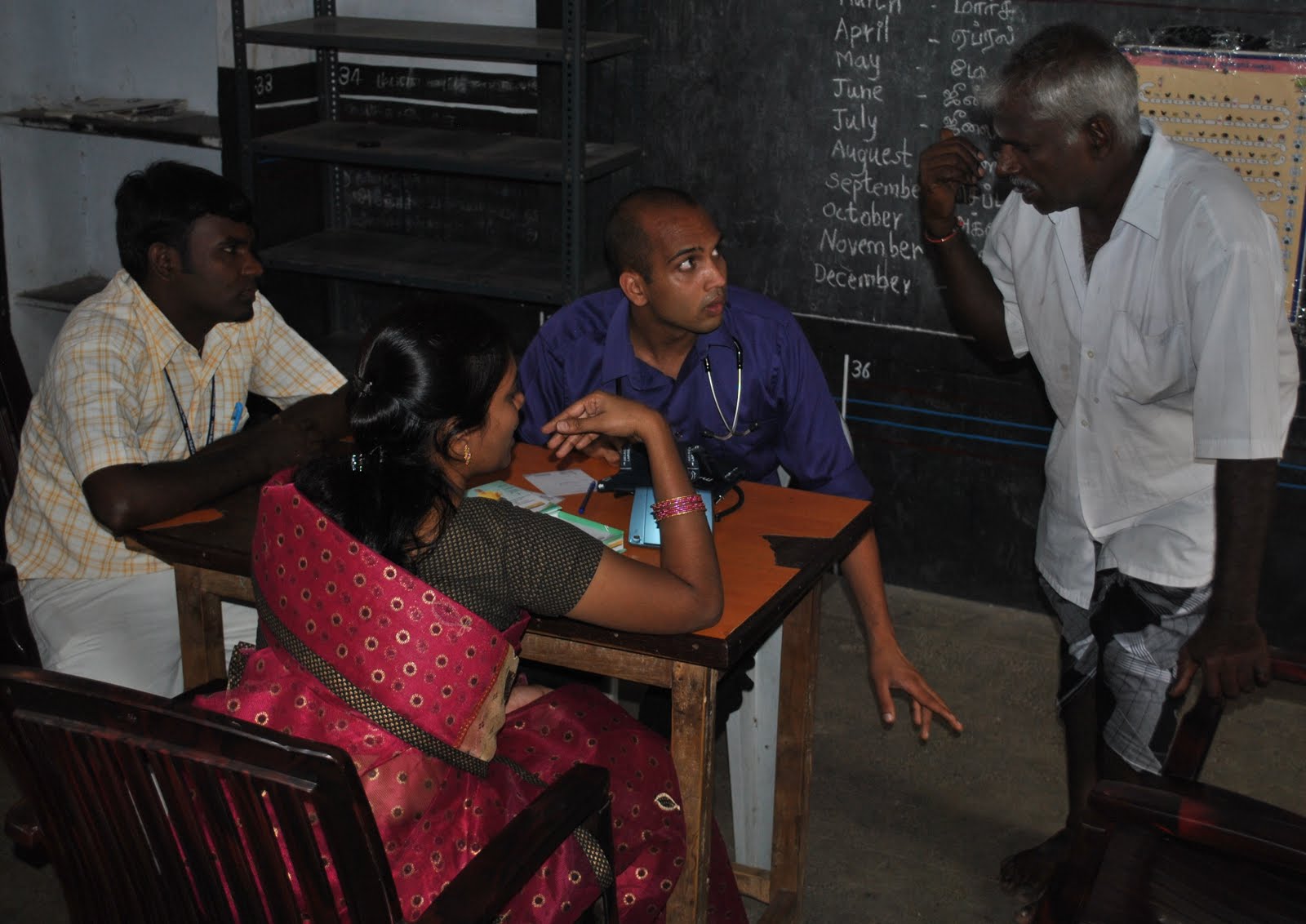
We were only two thirds through the camp and I had already seen over a hundred patients. Kartik and Gemlyn, my fellow medical officers, had seen even more and they had been keeping an eye on me the whole time. It isn’t as herculean as it sounds, really. In most cases, we just do some TLC for people with a motley collection of aches and complaints. We put them on calcium, iron, and multivitamins. Treat their heartburn with H2 blockers, deworm children, treat symptoms of cough and cold, provide antibiotics, antipyretics, and painkillers to the needy, check their hearts and lungs, counsel them on health-related matter, make referrals for ophthalmic, dermatological, and neurological conditions when we're out of our depth, etc. Some people just need to be able to chat for a few minutes with a guy armed with a stethoscope. People really just use us as a one-stop shop. I had a boy come to me with complaints of shortness of breath. Taking a history revealed that he sighed deeply from time to time and his mother freaked out about it. I probably shouldn't have burst out laughing- bad manners. Still, I don’t resent it. India has 70,000 doctors to care for her 1.2 billion citizens. With this insufficient ratio, It’s little wonder why people hoard up their problems-- big and small-- and bring them to community screenings like ours. We see a very wide range of medical problems in our camps in terms of severity.

Yesterday I saw a woman who had lost the use of her left hand after she got a serious electric shock. The hand was a claw. I suspected an issue with the ulnar and the median nerves, but couldn’t do anything. I also met a man whose body was paralysed on the right side. His steppage gait and asymmetric smile gave it away immediately, but there was nothing I could do about it. A wrinkled old lady with only one eye hobbled up to me with a cane next and complained of joint pain. I provided her calcium supplements for her bones, iron, B12, and folate tablets to correct her deficiency, and turpentine ointment for her joints, but-- basically-- I couldn’t do anything substantial for her. Kartik, Gemlyn, and I know that this is not simply not enough. Perhaps this is why we call ourselves “Quacks R Us” or “Two and half quacks”.
We can't blind ourselves to the horror of the health situation.

Soon after the lady limped away with her creaky cane and even creakier joints, a mother approached me with her son and daughter. Over the past three weeks, I’ve learned to quickly scan my patients for a few obvious pathologies. Here’s what I remember thinking in the 5-10 seconds they took to walk over:

Young woman. Looks a bit weary, though. Has the expressions of an older woman. Two children: boy and girl. Girl looks healthier than boy. Mother doesn’t have a patient form. The children do, though. The worry might be because of the health of children. The boy’s shirt is bulging just a tad. Protein Energy Malnutrition (PEM)? Make sure to check. What about the daughter? Anemia? Vitamin deficiency? General Malaise? Naah. Looks good. Let’s look at the boy. Looks a bit tenuous. How old is he? 9? 10? He’s walking a little bit awkwardly and unsurely. Is that just me? Am I scaring him?

I put on my warmest smile for the mother and the children to allay their fears. The boy was indeed tiny. I’m known to have a short torso and I still towered over him even when I was sitting down. The kid was actually 13 yeas old! Clearly, he was the victim of grave malnutrition. The mother complained that he had a weak heart. Having heard the same complaint from a couple of different mothers earlier that morning, I have to admit, I sighed silently and took off my stethoscope somewhat perfunctorily. I had to check for the kid’s PEM anyway so I unbuttoned his shirt. As expected, the PEM was there. Shobana, my translator and a dietician, began counseling the mother on the kid’s nutrition as I visually approximated the location of the the apex of his heart. I found it, placed my steth’s diaphragm on it, and closed my eyes to block out the other stimuli.
Does he look 13 to you? Note the distended belly characteristic of PEM.


Lub..swoosh...dup
Lub..swoosh...dup
Lub..swoosh...dup

My eyes opened wide with shock. It couldn’t be! I moved my steth systematically from the apex to the left of the manubrium sterni then up to the region under the clavicle and then back near the sternum at the second intercostal. To confirm the diagnosis, I checked for the sound in his left axilla. It was there. I had only heard this sound once before. I spun in my seat and decided to consult Kartik, a fount of all medical knowledge: “Kartik...pansystolic murmur...present in axilla...could be MR...please confirm.”

Kartik auscultated the boy and confirmed my suspicions in a minute: “It’s either Mitral Regurgitation (MR) or Ventricular Septum Defect. Tricky. You can feel good about it. Nice catch.” Considering, I had basically picked up rudimentary auscultation by reading in my spare time and with the help of some impromptu tutorials from my father over the phone and a Tanzanian doctor in my bungalow, I glowed with pride. Then, putting aside the glow for later enjoyment, I asked the pragmatic question: “So, what do we do?”

Kartik: What can we do?
Me: Refer to cards?
Kartik: I’m not sure if he’ll meet the requirements for free surgery.

And there we were. The familiar feeling of utter and complete helplessness darkened any remaining glow from a few minutes ago. Judging from his ripped shirt and malnourished frame, it was pretty clear that there was no way this kid’s parents could afford a valve repair or replacement. I hate not being able to do anything for the people who come and see me with hope in their eyes! For instance, I see 60 year olds with classic signs of radiculopathy and have to tell them that there’s nothing I can do for their pain. If they're 30-40, I can refer them to the orthopedics department, but 60 is considered so old that the number of DALYs saved do not justify the cost of the surgery. If these poor people persist, I have to send them off with calcium tablets. I sometimes worry that doing so might shake their faith in doctors and drive them to quacks and witch-doctors that lurk the countryside, preying on those neglected or disillusioned by India’s healthcare system.

 It's not like I think we do more bad than good. We've been able to help an enormous number of patients and catch some tricky diagnoses early. For instance, I caught a breast lump and a nasal cancer in two women yesterday and urged them to get them checked out before they grew any more. I suppose my frustration is just that I am not convinced that the work I am doing in my current capacity is bringing us very close to the utopic future people in global health envision and long for.
They're waiting to get the healthcare they deserve. We can't fool them. We can't cheat them. Not anymore.

Ultimately, we directed the child’s mother to the paediatrics department at CMC where we figured at least his PEM would be treated. We think there may be a chance that his heart problem will be attended to given his young age and CMC’s charitable mission. Thank god, for Christian charity! However, I have never ever been good with uncertainty and the very real possibility that that poor child will be left untreated for petty financial reasons bothers me and makes me smile wryly when anyone tells me I’m doing good work in India. I love diagnosing patients. I love being right. But what’s the point of it if treatment and resolution don't follow?

Sunday, July 10, 2011

Fixing leaks


Date: 07/10/2011


With my eyes scrunched up and my forehead crinkled, I listened like I had never listened before. The only thing I was aware of, apart from the drop of perspiration slipping slowly down my nose, was the beating of my patient’s heart in my ears. I moved the stethoscope to a different location to confirm my belief that there were no abnormal S3 or S4 sounds. A drop of perspiration fell from my the tip of my nose to the cement floor. I was tempted to take a break and wash my face at the tap outside.
Leaky tap outside the screening venue....fitting imagery for our global health situation?

We were in the midst of another community health screening. Our goal was to provide TLC to the population of the village and draw blood samples to test for the prevalence of Celiac disease in the community. This information is vital to avert an impending epidemic of the disease in India. We were planning to do screenings in two different villages and were expecting about 400 people to come by and ended up being overwhelmed with 500 attendees whom we saw over a course of 10 hours. Kartik, Gemlyn, and I were working as the medical officers. Our work was to quickly elicit a history and prescribe simple medicines ranging from multivitamins to famotidine (an H2 inhibitor to reduce excessive stomach acid production) to ameliorate their suffering. We also referred them to specialists when we realized that we were out of our depth. Suresh and Shrikanth were drawing blood samples, Bala was directing the whole show. Vettri was measuring heights, John and Murugan were drawing in the crowds, and Gowri was helping me with the translations.
Bala being a dynamic leader as usual


You can see how crowded it was getting.


My stethoscope had been repositioned and I was about to re-scrunch my eyes when I noticed the lady’s son staring at me. My eyes scanned his tiny body. I took in his bare feet and his hair which glistened with the coconut oil his mother had put in lovingly. His shirt was buttoned in two places and held in another place by a safety pin. It was only then that I noticed how his shirt was stretching over his distended belly. After another few crinkled and scrunched up seconds, I determined that his mother didn’t have any obviously abnormal heart sounds. She turned to go, but I took the moment to swoop down on the kid. A quick unbuttoning (and un-safety-pin-ing) later, my suspicion was confirmed-- his belly was distended and his limbs were stick thin, a sign of protein energy malnutrition (PEM). With Gowri  translating rapidly, I immediately counseled the mother on the child’s nutrition and gave him a deworming pill (Albendazole, single dose) for good measure. His brother turned out to have the same problem. Fixing PEM early in childhood has been shown to increase the income and productivity of individuals. Abhijit Banerjee and Esther Duflo remind us that Kenyan children who were dewormed for two years earned 20% more than children in schools of equal quality who were only dewormed for one year.  I was immensely pleased to have a crack at this high yield intervention. 
A little girl in the next village. Her prominent pot-belly and stick thin limbs helped me diagnose her protein energy malnutrition from across the street.

A few minutes later, I cautiously pulled a young man’s eyelids down to check for pallor in his conjunctiva which, if present, is indicative of anaemia. I felt my shirt being pulled out of my Jeans. With some irritation, I wheeled around to face the scoundrel perpetrating this sartorial outrage on me. I came face to face with a fourteen month old girl with big brown eyes and half open mouth in her mother’s arms. My irritation morphed into a smile as I greeted the little girl. However, within a few seconds, it was apparent that she too suffered from PEM. My mentor, Dr. Guerrant, had demonstrated that the window of opportunity to do something about malnutrition and the subsequent stunting ended at 2 years. She was 14 months old! I still had the time to fix her trajectory of growth! I did so with great gusto and optimism. Over the course of the day, I did this again and again. Interestingly, many of the parents hadn’t brought the children to be checked and I only caught them because I was looking for signs of malnutrition in the kids. 

This is the sight that greeted me when I spun around in irritation.

Handing the baby back to the mother after inspecting her.


I know I often write very dejectedly and bitterly about global health issues. Even today, I met people I could do nothing for like a gentleman and a lady with severe chronic obstructive pulmonary disorder (COPD). For them, it’s de facto a death sentence because they don’t have the economic means to secure treatment and the public health system is too overwhelmed to subsidize it for them. I see the global health issues our world faces as similar to the leaky tap in some respects. Bit by bit, we lose human capital to stupid and preventable conditions like malnutrition and malaria. It may not seem like a lot, but the drops and the lives being wasted both add up to a burden the world can ill afford. By helping those little children today, I feel I plugged the leak on a nano-scale and I don’t see why we can’t do it on an infinitely larger scale. 

He had severe COPD. I heard the wheezing through my steth and asked Gemlyn to confirm the diagnosis. We couldn't do anything for this poor fellow. He simply cannot afford the Rs. 10000 per month ($750 USD PPP) that are required for the best treatment. Still, sometimes it's important to focus on the good we can do as well as the areas where we feel helpless.


Friday, July 8, 2011

Stomach issues

Date: 07/08/2011

“It made me sick to the stomach!”

No, you don't understand. It really did. By "it" I mean some medicines I am on and possibly some food I consumed last night that was probably laced with only the choicest mix of gourmet bacterial enterotoxins. The repeated trips to the bathroom make me feel like a pregnant father. I console myself by remembering that this too will pass (at a rapid rate from both ends of the gastrointestinal system).
This dish should have been labelled as follows: "You'll be sorryyy."
Conquering the urge to bivouac myself into the bathroom, I gingerly dressed and poured myself into a nearby auto. I usually ease my way into ambulances that run between the college campus and the hospital by casually tossing a stethoscope around my neck-- in this tiny college town, doctors (even pretend ones like me) are seldom stopped from doing anything. They, the public reckons, probably know what they’re doing. I love it! Given, my ginger GI system, the auto was an awful choice. My liver rattled against my ribcage as usual and my spleen seemed to be accompanying it today. Fortunately, I followed my golden rule of not watching where the auto was going. It’s not something the faint of heart or gut should do. My eyes were firmly fixed on my Haematology book’s riveting discussion on anaemia.

After extricating myself from the auto, completely oblivious to how many times I had come close to shuffling off my mortal coil, I looked to the left and then to the right.

Left hemisphere:(clipped, sergeant major tone) “No, idiot, you’re in India!”
Right hemisphere: (slow, dull voice) “Oh, OK.”

I looked right and then left.

Left hemisphere: Hmm...not much point to it, is there?

Unlike countries that have established walk and stop signs, crossing streets in India is an adventurous activity. It is widely known that your safety on the road is your own responsibility, not that of the vehicle hurtling towards you at imprudent speeds. My morning ritual involves hopping cautiously across the street dodging cycle rickshaws loaded with school-going children and milkmen on motorbikes. All this while, I find myself chanting “Dekho Dekho!” (look out). I heard a non-Indian pooh pooh the notion that you have to be careful in India a few days ago. “India Schmindia” were his exact words. Poor bloke, he’s going to meet a sticky end faster than the driver of a speeding bus/auto-rickshaw/elephant can shout “DEKHO DEKHO”.
An oddly uncrowded street in Vellore. Notice how fearlessly the man in the pink shirt is crossing the road after a gang of yellow autos rampaged past him.

Having safely, crossed the street without being gored/stomped/trampled, I strode into the hospital. A familiar sight awaited me:

Perhaps this is a testament to the secularism of India. Hindu women praying in front of a cross.

This small lady seems like she has immense faith in divine intervention.

Can you see the number of candles?

This is a cross between a church and a little hindu temple. Christian Medical College (CMC) is a 2500 bed hospital that has been around for the past 111 years and I often think of how many millions of candles people of all faiths have lit here and how fervently they must have prayed. I usually stop for a second and pray with them. Frequently, I watch them from a distance (somewhat creepy, I accept) and can almost see their unshakeable belief in the mercy of christ/vishnu/allah/karma exuding from their bodies like a fragrant vapour. Today, I surreptitiously photographed them with my iphone.
Snake bite? Abcess? Occupational injury? Dog bite? Buruli's ulcer? Leprosy?

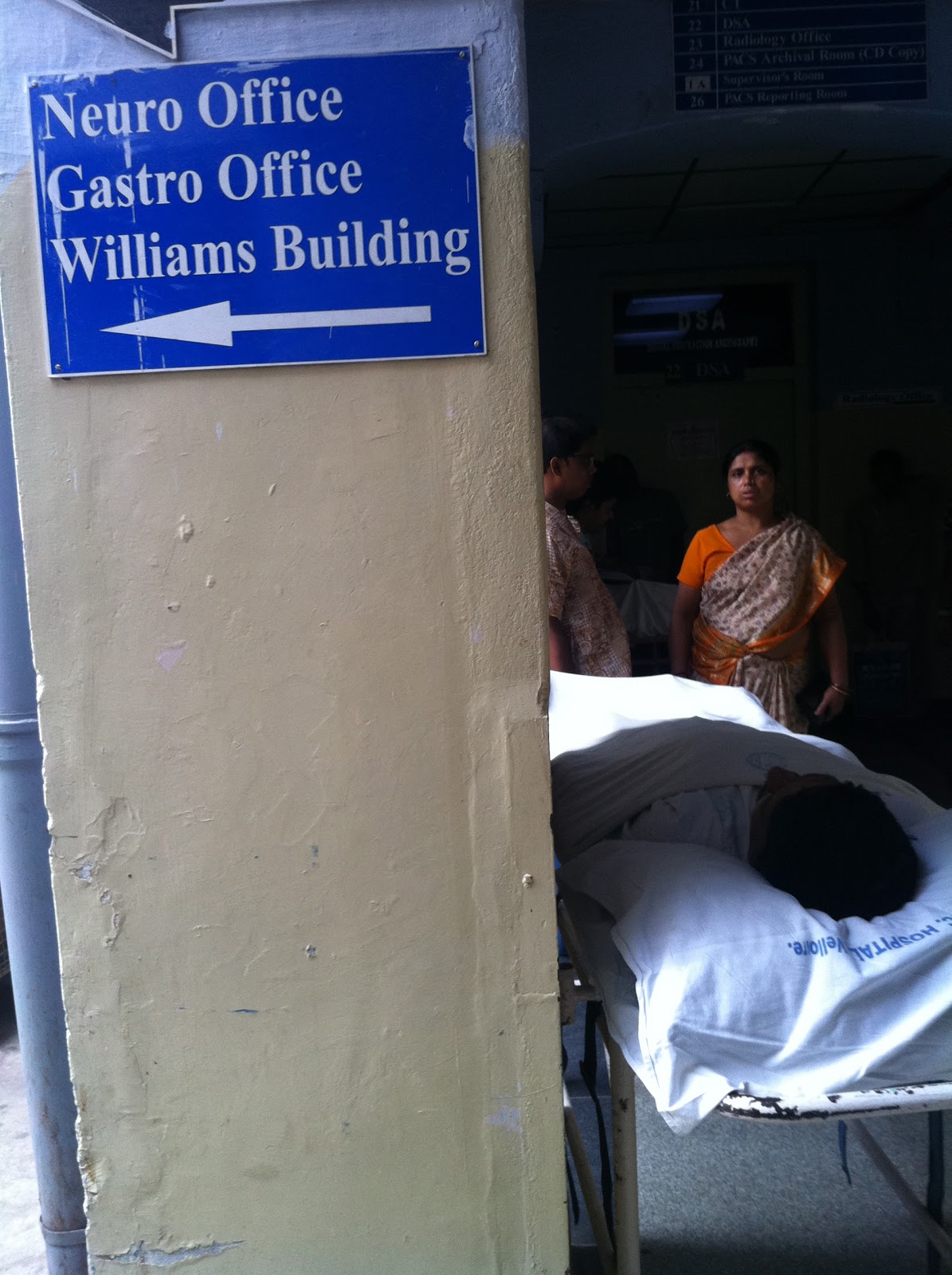
Having been reliably informed that I look like a pervert when I smile, I didn’t stare too long and walked into the main corridor of the hospital. Here, I usually encounter what medical students call “Zebras”, rare diseases that you’ll probably never see in your life. CMC is a referral hospital and it sees patients from all corners of Asia. The old saying goes: “When you hear hoof-beats, think horses, not zebras.” At CMC, you think zebras. My two minute walk to the GI department is spent staring rudely at the people I pass in the corridors and trying (usually failing) to guess their ailments. Many patients are impoverished and they receive free care here. For instance, there’s no chance that a child with a treatable entity like Acute Lymphoblastic Leukemia would get turned away from the Haem/Onc unit at CMC regardless of his ability to pay. I thank Christ/Vishnu/Allah that institutions like this exist in India where people can access world class care.
I work in Williams building and I pass poor patients like these on a daily basis.

However, just as I reached the GI unit, I felt a familiar rumble in my tummy. No, this was not the product of nasty medications or exotic enterotoxins. It was the gut wrenching realization that millions of my countrymen don’t have the economic wherewithal to travel to CMC. It was time to get to work.

------

Sorry, this blog post didn't turn out quite as well as I had hoped. I was attempting a Gogol-esque funny beginning with a ridiculously sad ending (like in "The Raincoat"). I was trying to show how my day begins with personal issues, moves on to medicine, and-- ultimately-- to public health. It gets progressively less funny because there's nothing funny about India's public health situation. Unfortunately, I couldn't quite pull it off. 

Sunday, July 3, 2011

Helplessly yours


Date: 07/03/2011

“Kavalai padadhinga, sari agidum.”

I stumbled over these newly-learned words with obvious difficulty. I doubt I inspired an iota of confidence in the patients I said this to despite the flashy stethoscope slung over my shoulders to assure them that I am a denizen of the medical world. Shobana, a lovely nutritionist at CMC, had taught me a few useful Tamil phrases despite the hectic pace of the community health screening we was working in. I could now say “Sapttangala” (Have you had breakfast?) and “Unga pirachanai yenna” (What is your problem?). “Kavalai padadhinga, sari agidum” roughly translates as follows: I’m sorry to hear that. Everything will get better.

The problem was that I didn’t believe things would get better at all.

"Nalla irukkingala" (How are you?). I was trying to figure out how this gentleman hurt his feet. Shobana (pink sari) is translating for him. She's "nalla" (very good).

We had advertised the camp (the common Indian term for a community health screening) on Saturday and were expecting about 600 people to show up. The turn out was still unbelievable-- 155! Kartik, Shobana, and I were talking to the patients and listening to their complaints. We checked their blood pressure, looked for anemia induced pallor of their eyes, and dispensed acetaminophen, anti-histamines, mutlivitamins, and calcium as we saw appropriate. I even prescribed antibiotic creams to a couple of people, notably to someone who probably had a mild case of Hansen’s disease (leprosy) and had some infected wounds on his feet.


Kartik talked to the eutherian sabre tooth tiger's share of the patient load (sorry, inside joke).

Kartik, Dr. Rama’s son and the chief medical officer of the event, handled the majority of these patients on his own. I think I may have seen about 20-30 with Shobana helping me out with the translations. Dr. Bala also made me practice doing blood draws so I did about 25 of those, oftentimes with people crowding around me to witness the grotesque spectacle of blood spurting into my vacutainers. Some of the children stood so close to me that their little heads got in the way of my hands as I tied the tourniquet and changed containers.
Drawing blood from a particularly hard case. Third time was the charm.

We only had a few minutes with each patient and it was very frustrating for me not to be able to properly investigate the aches and pains that the patients brought to me. Moreover, as Kartik pointed out to me, it wouldn’t do them much good. He insisted that many of them, like a gentleman, who sported a white beard that matched his white kurta and seemed to be showing signs of Parkinson’s disease, wouldn’t be able to afford the treatment. For similar reasons, we found ourselves unable to do very much for a gentleman who came to us with blurry vision and jaundice. When we listened to his heart, through his disheveled red checked shirt which was only buttoned in two spots, we heard a pretty clear mitral valve regurgitation. The edema (swelling) in his feet, probably due to his heart condition, was so gigantic that Kartik initially thought he had Elephantiasis (a condition aptly named because your legs and arms can swell to a freakish degree and resemble the limbs of Elephants). We just had to let them go, knowing what fate held in store for them.

One of my motivations for getting into medicine was that I didn’t want to stand around helplessly when someone was sick. And yet, I was forced to watch indignantly as the gentlemen with Parkinson’s shuffled away from me: “Damn it! I knew how to treat him! Why the hell can’t I or someone else treat him?” This happened again and again and if there was a lab test for cynicism, a blood sample from me at the end of the camp would show trace bits of it today. Change is needed...and fast. It’s up to our generation of physicians and economists to facilitate it. I’d rail more, but I’m exhausted and I don’t want to devolve into melodrama.

Hopefully, one day, I’ll be able to say “Kavalai padadhinga, sari agidum” and believe it.

Suresh, phlebotomist par excellence, did at least 100 blood draws today and came to my rescue at least twice.

-----------
In less depressing news, it rained in Vellore today which gave us all a respite from the heat. I was walking to the canteen for some Uttapam when I kicked a frog accidentally. As I watched it complete its parabolic trajectory, a thought made me feel sick. Rains meant frogs and frogs meant snakes. Oh dear!

By “Oh dear”, I really mean “OMG, I don’t want to be eaten by a gigantic Krait that chooses to creep into my room or snare me while I am galloping back for a second slice of truffle cake at the college store! I much preferred the hot vellore sun which nearly solved Indian agriculture’s irrigation issues by inducing torrents of sweat from my body to this stupid monsoon that brings me monstrous serpents.”

As Tintin would say: “Great snakes!!!”

Friday, July 1, 2011

Confused in Chennai, Vacuous in Vellore

Date: 07/01/2011
A street view of Vellore
The cool interiors of the aircraft gave way to a tarmac that was bindingly bright and blistering at a 100 degrees Fahrenheit. With a groan, I shrugged off my black sports coat and boarded the bus that ferried me to the terminal. As I was exiting the bus, I heard an unintelligible (to me, at least) yell.

Lady: (insert white hot fury expressed in Tamil that made the tarmac look cool)

Me: (dumb look)

Lady: (angry gestures that I should let her spawn exit the bus first)

Me: Sorry!

As I let the kid and the lady exit the bus, I experience deja vu. I was in the South.

Vellore is marked with the red oval.


India is a massive country with 1.2 billion people. The country is divided into 28 states and 7 union territories. The states were created along linguistic lines. Each state is roughly the size of a European country so traveling between states is almost like traveling between different countries in that the language and the culture changes distinctly. The steepest divide lies between the northern states and the southern states due to reasons beyond the scope of this blog post.  I'm now in the southernmost Indian state of Tamil Nadu. The main language here is Tamil. It is one of the most educated and progressive states of India. There’s a widespread delusion among second generation Indians in the US and even some non-resident Indians that you can communicate with basically everyone in India if you speak Hindi and English. In my case, three days in Tamil Nadu have rendered any vestige of that belief dead in the water. More on this soon

My bus ticket to Vellore from Chnnai. Journey time: 2.5hrs
I took a bus from Chennai to Vellore and then was mobbed by auto drivers. Autos (as in Auto Rickshaws) are surely a conspiracy of some religious secret society to ensure piety among Indians. When you’re within an Rickshaw as it careens through Indian streets at imprudent speeds and brushes aside pedestrians who’re forced to run for their lives, you quickly abandon atheism/agnosticism and beg God to forgive your waywardness and get you home safely. A young lad in the mob of auto drivers finally out-shouted everyone and gave me an organ-rattling ride to my accommodations. He must have heard my liver rattling against my ribs so he decided to regale me with his life story and simultaneously practice his accented Urdu on me. He was the sole offspring of his parents and was married very early so he had no option but to forego education and take care of them by driving his auto. When we got to Bergen house (my guest house) I poured myself out of the rickshaw, gave him a generous tip (for not killing me and to take care of his pregnant wife), and began dragging my suitcases up the stairs. He rushed up and asked to make a request of me.

Me: What do you want?
Lad: Sir, when you’re a doctor, please charge the impoverished half the rate you charge the wealthy.
Me: Will do

The significance of the request was not lost on me. The impoverished fall ill more often and suffer great economic setbacks due to medical expenses, which-- in turn-- leads to more sickness. A real poverty trap. Esther Duflo and Abhijit Banerjee do a beautiful job of describing it in their book, Poor Economics. An interesting discussion of it can also be found in a report by Harold Alderman for the disease control priorities project.
Bergen House: my wonderful, though slightly pricey, abode in Vellore. It's on the CMC college campus pictured below.


The next day, I got a call on my room’s phone. A deep voice identified itself as Dr. Ramakrishna, my mentor at CMC. He’s the head of the Dept. of Gastroenterology and is involved in all sorts of brilliant project. He drove down a few minutes later to pick me up from Bergen House. Dr. Rama is a tall man who talks deliberately and takes a second to think before answering your questions in a lucid and well-considered way. Even his laugh is deliberate, deep, and rich. We began talking about the logistics of my project and talk turned to the state of healthcare in India. By the end of the ride ee were discussing the disorganization and the inadequacy of funds that plagued the public health system. India spends about 3% of its GDP on health. America spends about 17%. neither extreme is good. One of the interesting things Dr. Rama said during the ride was with respect to cancer. He said that India has a poor tumour directory because documenting tumours is very very far from his priority. When faced with the illness of a family member, Indians, particularly poor ones, are known to sell their lands and take outrageous debts. Therefore, his main priority is actually to prevent cut-throat money lenders, witch-doctors, and quacks from bleeding patients dry.


Christian Medical College (CMC): One of the finest medical colleges in India.

Having ascertained that I hadn’t had sufficient breakfast, Dr. Rama took me for a vada ( a delicious lentil based southern recipe) and delicious filter coffee. Drs. Pugazhendhi and Shrikanth accompanied us. Once we got our coffees and vadas, we sat at the table looking at each other with awkward smiles. Dr. Rama introduced an icebreaker


Dr. Rama: Do you pronounce your name the Bengali way (PranOY) or the other way (PranAY)


Pranay: PranAY.


This gave me the opportunity to rant about my appalling name. The ice was broken. Phew! We were all chuckling now. Next we talked about my complete incomprehension of Tamil.

Last year, I had brought my then girlfriend to India. It is only now that I understand her plight. She had been mostly dependent on me for translating the goings on even though she spoke a little Hindi that she’d learned from Bollywood movies and Rosetta stone. 


I, on the other hand, was utterly dependent on Dr. Rama and the other doctors for communicating with people. I felt like a complete moron standing around, not understanding a SINGLE word. I felt even worse when people broke off their high-speed conversations to explain the gist of the dialogue to me. They did this very slowly in case I didn’t understand even their English. Vettri, the driver who has been taking me around, probably thinks that I am mentally challenged because our conversations go as follows:
Vettri: (in Tamil) You need to go to that shop to get a passport picture.
Pranay: (thinking he’s asking me how I like Vellore) errr...very nice
Vettri: (now confused, still in Tamil) Umm...go to that shop over there, I’ll wait here.
Pranay: (thinking he’s talking about films) I’d love to watch a Tamil movie. English subtitles?
Vettri: (in heavily accented and broken english) Go to the damn shop now.
Pranay: (with my patented look of dumb incomprehension) Eh?
Vettri: (gesticulating furiously now) GO!
Pranay: (understanding finally dawns) Ok, ok, keep your shirt on.
I’m obviously kidding. Vettri has shown me the greatest politeness and tolerance. However, I do need to learn some Tamil to make things easier for the people I’m working with and the individuals I’ll be interviewing.
I’ll write more about the projects I am involved in in future posts. Watch this space. I’m also putting up pictures from the trip on my flickr photostream.

In India, the versatility of your vehicle is only limited by your imagination. Kudos to this gentleman in Chennai who had precariously balanced this old television on his motorcycle.