Know you blogger

My photo
Vellore, Tamil Nadu, India
I'm a frood who knows where his towel is.
Showing posts with label poverty. Show all posts

Sunday, August 7, 2011

Why I disagree with John Mayer


Date: 08/07/2011


This is a personal reflection about my work this summer and my last post on this blog. Please excuse the fluctuating volume; this is my first project of this sort. Thanks for following my blog this summer. I'm immensely grateful. Here's a text of the video:
                          
Me and all my friends
We're all misunderstood
They say we stand for nothing and
There's no way we ever could


Nowe we see everything that's going wrong
With the world and those who lead it
We just feel like we don't have the means
To rise above and beat it


So we keep waiting 
Waiting for the world to change
We keep on waiting
Waiting on the world to change


                              --John Mayer


After my experiences this summer, I find that I rather disagree with John Mayer. I just spent six weeks in India studying malnutrition and working with people who were sick because they were poor and poor because they were sick. The one thing that’s clear to me is this: the situation is urgent. Sitting around waiting for it to change will not work.


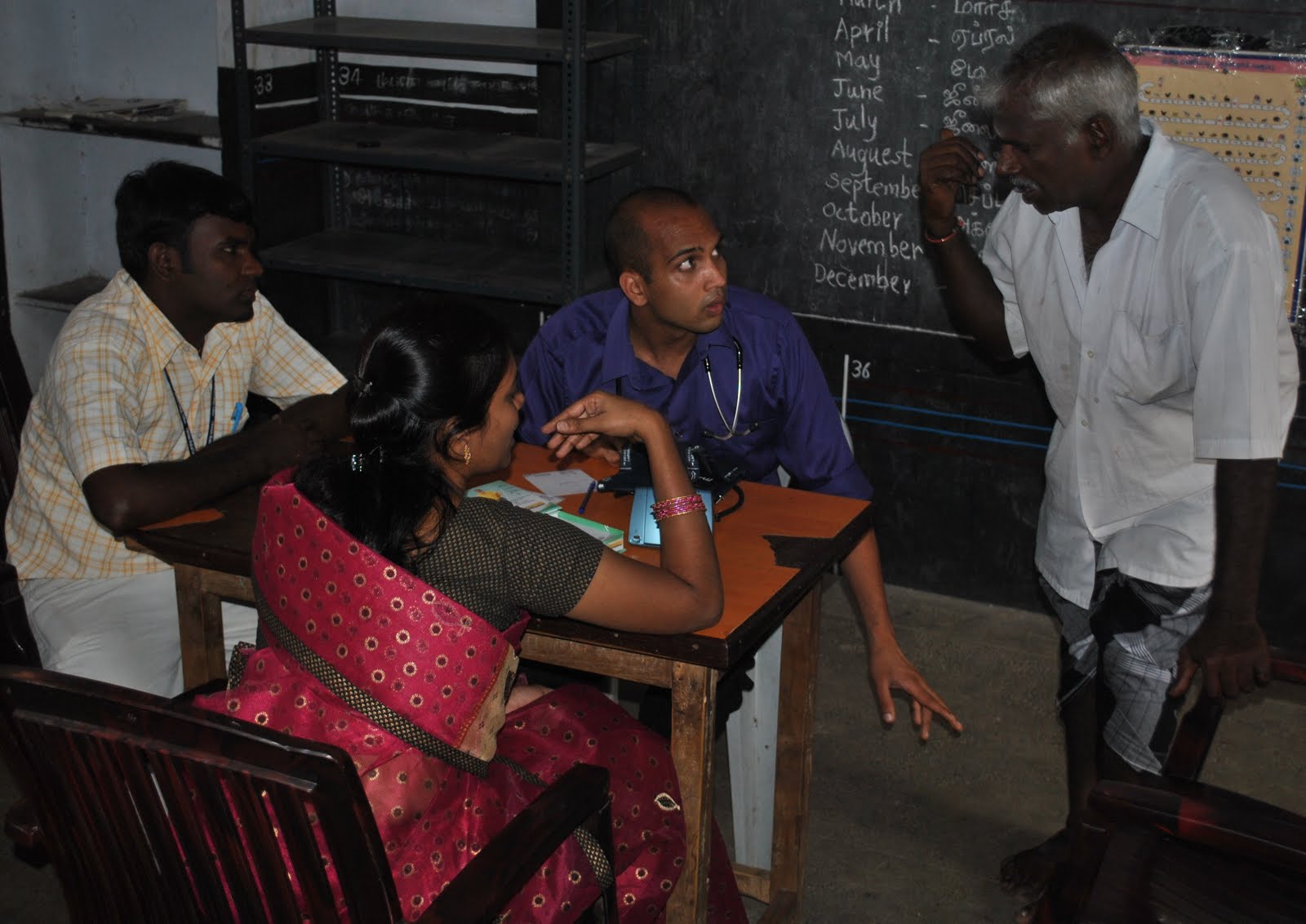
The bulk of my work this summer involved a case control study that looked at the link between cognition and malnutrition. I was rather surprised at my results and my mentor believes we have prima facie evidence that upholds our hypothesis. I cannot talk more about it here out of privacy, sensitivity, and scientific concerns. Apart from this work, I participated in community health screenings under the supervision of some young doctors from Christian Medical College. The camps were held in villages near Vellore. In three weeks, I met, examined, and spoke to around four hundred individuals. I heard hundreds of complaints about bodyaches and counselled hundreds on their nutritional intake. I also had the privilege of helping out dozens of kids with nutritional issues such as vitamin, calcium, and iron deficiencies by providing them with supplements, deworming tablets, and counseling their parents. There was tremendous satisfaction in the knowledge that such early interventions would have a large ripple effect.


However, my levity and optimism took a titanic blow when I used my newly acquired skill of cardiac auscultation to detect mitral regurgitation in a child and then found that he would probably not be able to afford the necessary treatment. The incident brought me face to face with the limited scope of my interventions. It wasn’t that it was bad. It simply wasn’t enough. We need to go beyond the biomedical level to the socio-economic and political level of medicine.


 Of course, any time I mentioned political fixes in India, I was met with a barrage of cynicism and disgruntlement with the political machinery of our country. “There’s no political will”, moans one. “These bloody politicians are all corrupt”, groans another. This isn’t a surprise considering the recent political storm about high level corruption in the Indian government.  I like to refute these tigerish outbursts by reminding these indignant folk that we don’t live under the tyrannical rule of a monarch. Votes are the lifeblood of politicians. As public intellectuals, we can agitate and spread awareness so that public health and health inequalities become serious voting issues. This needs to be done not only among the rich and educated but also among the poor and illiterate who are more susceptible to demagogues. Gemlyn George, one of the doctors I worked with this summer opines that Indian politicians don’t find working on public healthcare a lucrative source of votes because the pay-off is slow and is unlikely to benefit them politically in the near future. It’s time to make it worth their while to fix our healthcare nightmare.


One of the issues that is aching for a political remedy is that of the stigma and lack of awareness that plagues Leprosy patients in India. I visited the Schieffelin Leprosy Research & Training Centre near Vellore where I met many patients of Leprosy who quietly endured the deformities and disfigurements that their circumstances had brought onto them. I plan to write a lot about Leprosy and the specific ways in which it can be attacked politically and socio-economically, but I want to dwell here on the moment I shook the clawed hand of a Leprosy patient. It was a feeling of incredibly inadequacy. He had lost his position in society and the use of his hands. What had I lost in my life? The hair on my head? Romantic relationships? This man’s suffering was on a scale beyond my comprehension. I felt petty. 
Dr. Rama, my absolutely amazing mentor.


My Indian mentor Dr. Ramakrishna pointed out to me that I was witness to the fortitude of the human spirit even in the face of the adversities of poverty and disease. Despite their bereavements, and suffering, the people around me, including some Leprosy patients, smiled. The children frolicked and goaded me brattishly to take their pictures with my camera. I saw a rickety old grandmother dance with a little too much gusto in a shockingly orange sari in her grandchildren’s wedding. Our car got rather delayed one day due to the festive Aadi celebration in which seemingly the entire population of Vellore took to the roads. Life goes on, believe it or not, and not always in a dismal way. I will probably never understand the source of this resilience, but I shall always bow my head in reverence.


We are sitting on a dynamo of human capital that is slowly going to waste to due to stupid reasons. I particularly like analogizing our healthcare situation to a leaking tap. Like the drops of water lost, the loss of human capital does not seem huge at first. However, the drops and lives add up over time. Fixing these small leaks of human capital all over the world would be transformational. The world would change. As educated and relatively prosperous people of the world, we have the tools to do this! We have done so in the past, don’t be cynical about trying again. Most importantly, please don’t sit around waiting with your friends for the world to change. It won’t until you change it. 

Sunday, July 24, 2011

Poverty, poor education, and the re-emergence of caste in India

Date: 07/24/2011


“Poor people are usually very uncivil in their behaviour...... they would have hazy scruples, usually resorting to base activities (theft, crime, rape) to get by....Indians seem to be so used to living in low quality surroundings, they have become low quality people..... poor kids have been allowed to grow into poor adults, and what their value system is like is anyone's guess.... bad civil engineering, slums which are allowed to propagate[SIC], uneducated people being allowed to have a say in the decision making process by allowing them to vote, all have resulted in a society that more resembles a bacterial colony than a human civilization....So it would all have to start with forming a new megacity like bangalore or mumbai in some new place...... Restrict the number of people per square kilometre. NO UNEDUCATED B*******S ALLOWED.”

I blinked in disbelief as I finished the email. I re-read it again to make sure I hadn’t imagined it. No, I was bang on the first time. It wasn’t the first time, neither in my life nor during this trip, that I had come across such sentiments from Indians in my age group. Every time such opinions are aired in my presence, I get a really unpleasant deja vu. I hadn’t been able to place this sense of deja vu until yesterday: this was exactly how I had felt, in the 6th grade, when I had seen a picture of an “untouchable” being beaten to death by members of a so-called-high caste for casting his shadow on their food. Are we about to see the rise of a new type of caste system, one that marginalizes and exploits the poor and the uneducated?

The conditions couldn’t be more favorable! As I mentioned in a previous post, the newfound prosperity of India is limited to a population of about 60 million. Of the remaining 1.14 billion, 638 billion are so poor that they’re forced to defecate outdoors. These two types of Indians live in two distinctly different worlds: while the women in one set plan trips to America and Europe, women in the other plan trips to the fields to at night to defecate with a modicum of privacy. It is easy to imagine, for me at least, how the disgust of one group can be easily matched by the resentment of the other. Indeed, such is the case. I’ve heard poor men complain about the avarice and the immorality of the “big people from big cities” and I’ve encountered disgust at the lifestyle of the poor from my rich friends and a concern that they’re dragging down their quality of life. The poor judge the rich on their abandonment of traditional values whereas the rich make cruel jokes about the poor for their lack of “polish” and finesse (as described by our erstwhile British masters). A frequent complaint I’ve heard is that the poor shouldn’t be allowed to vote because they are uninformed and easily manipulable. This is madness! We’re all citizens of India. Our status as humans is not contingent upon our income or education. We can’t allow our society to be ripped apart like this.


Yes, the differences are steep.
I have written this post to beseech my educated Indian readers to be aware of this us-and-them feeling that is ingrained in Indian society and may lead to another caste-like divide even if it is not called as such. At least in the short term, I don’t see the vast polarities in India changing. We must not let the polarities change us in our approach to the disadvantaged. All this nonsense about the poor being morally corrupt and acclimatized to subhuman living conditions is precisely that-- nonsense. The person who treated me most graciously this summer could not have made more than Rs. 4000 a month ($100), which is really not that much. Embarrassingly, I probably had twice that much money in my wallet when I met him. At one of our community screenings. I mentioned that I was a bit hungry since I had not had breakfast. Traditional Hindus hold the view that guests must be treated like gods. This man, a senior resident of the village, promptly took out his own humble breakfast of idly and sambar and forced me to eat it. I felt horrible taking his food, but he absolutely refused to accept my “no, thank you” or my money. What’s more, he insisted on waiting on me and even helped me wash my hands with water that he had gotten out of a water pump. I know from experience that this is the rule, not the exception. So, please, don’t vilify the poor. They’re more sophisticated than they’re given credit for.


 I don't think it is possible for anyone with the means to read this blogpost to imagine the life of a truly poor individual. Consequently, we have no right to make blanket statements condemning or belittling the poor.

Another frequent accusation about the poor is that they reproduce quickly, put increased pressure on the already limited resources, and increase the congestion. Yes, this is true. A popular theory behind this is that, given the high infant mortality rates among the impoverished, parents decide to have a lot of children so that at least a few are left behind to take care of them when they are old. This has been shown in numerous studies. Children, after all, are the traditional retirement plans for parents in countries like mine. Even my parents, who are not at all poor, think of me as their retirement fund and are counting on me to take care of them when they are unable to do so themselves. Most people approach this population problem in a Malthusian spirit which is incredibly dangerous. History has repeatedly testified that reducing poverty also reduces the fertility rate and the infant morality rate. Dr. Guerrant loves giving the example of New York City which had a higher fertility and mortality rate than present day Bangladesh(2). On the graph below, you can see how they fell with the increased prosperity of New Yorkers. So, if you want to reduce population and congestion, help the poor get out of the poverty trap and keep them healthy. It’s literally the only thing that works.


Note how regions infamous for high mortality inevitably also have a high fertility rate. It is a compensatory dynamic. (2)
One thing that the poor demonstrably do lack is education. This leads to superstitious beliefs and an inability to fully utilize the resources that are available to them. Every extra year of school education, adds about 8% to an individual’s earning capacity(1). Therefore, not being able to receive a complete education is a recipe for remaining poor. Reading Poor Economics by Abhijit Banerjee and Esther Duflo really made me appreciate the things that influence a poor man’s ability and decision to send their children to school. They do so amidst immense hardship. Education is a privilege and if you manage to get a good one, that’s your great good fortune. All the Indians who’ve ever launched into diatribes about our uneducated countrymen went to school in buses. The kids they rip on had to walk many miles to school and not always with shoes. In fact, Gemlyn, one of my coworkers this summer, helped formed an NGO that enhanced school attendance amongst children in remote areas by buying them shoes and hiring auto-rickshaws to carry them to good schools that were 16 kilometres (ten miles) away from their villages.

Unfortunately, even if they get to school, many times the education is terribly sub-par. Sister Eugini, the principal of Auxillium College in Vellore, told me about the horrendous schools in rural Tamil Nadu where the teachers come late, if at all, and refuse to teach. The children spend their time polishing the teacher’s bike instead of their maths skills. The teacher leave the school on seemingly luminous bicycles, leaving behind children who are doomed to a dark academic or economic future. Surprise checks did help a little, but they’re not always possible. Some fundamental changes are needed, but I am not qualified to prescribe any(3).
Yes, crowds can get frustrating in India.
Many of us make these “us-and-them” comments about the poor and uneducated without sufficient thought. I don’t actually think malice lies at the root of it for the most part. Frustration? Perhaps. India is decidedly overcrowded, overcompetitive, and not always clean. People coming back from a sojourn abroad, like the friend who wrote me the email, do suffer from reverse culture shock. I wrote this piece to make them aware of this tendency and how it can lead to fissures and intolerance in our society reminiscent of the abhorrent caste system that still lingers in India like a metastatic cancerous lesion. In conclusion, I’d like to present a Thomas Jefferson quote that I found paraphrased in Dr. Guerrant’s article (2):

“The power of society belongs in the hands of the people. If the people should ever seem in-adequately enlightened to exercise this power, the solution is not to remove the power from the people, but to educate them.’’

I think our work is cut out for us.

----

Disclaimer: The guy who sent me the email is an old friend. I respect him deeply as a scientist, but he has just returned from a very well designed and run European country and is almost certainly in reverse culture shock. Please don’t criticise him in the comments.

Bibliography:

  1. Banerjee, AV and Duflo E. Poor Economics. Random House India. 2011
  2. R.L. Guerrant Why America Must Care About Tropical Medicine: Threats to Global Health and Security From Tropical Infectious Disease. American Journal of Tropical Medicine and Hygeine. 59 (1) 1998.
  3. Personal communication. 07/01/2011

Tuesday, July 19, 2011

A brown sahib in a bus


Date: 07/19/2011

The bus starts out empty.

“Pranay, like it or not, you will be a gringo in India.” Dr. Guerrant warned me as I got ready to fly to India, my own country. Gringo is the picturesque Latin American term for foreigners. Personally, I had felt slightly outraged. I am, after all, a passport carrying citizen of India! Born in humid Kolkata and raised in the dry heat of New Delhi, I did not consider myself a brown sahib, a term reserved for the educated Indians who served the British raj in India. Brown sahibs were often more English than the English.

I was still bristling at Dr. Guerrant’s warning when I boarded the bus this morning. After tossing three well-worn one rupee coins to the conductor, I curled myself into a window seat. I say curled because it is impossible for anyone taller than 5 feet to sit in those seats without an impromptou display of contortionism. Reading on the bus is physically impossible-- the customary jerks are colossal enough to rearrange your visceral organs. If this were not enough, the imaginative interpretation of traffic laws by most bus drivers is sufficient to reacquaint any traveling atheists with the deities they staunchly deny.  I have learned my lesson and now just sit and commune with my fellow Indians quietly.


And ends up looking like this.

Five minutes into my jangly bus ride, I saw a lady, in a gorgeous saffron sari who was squatting behind a small bush. She was defecating. Seeing the bus approach, she made a few perfunctory moves to conceal herself, but she knew as well as I that it was futile. I averted my gaze to give her some privacy. Though I had seen similar sights hundreds of times before, it shook me up in a way that the bus could not. I was struck by the thought that my India was so different than hers.

“India’s economy will soon overtake China’s,” is the proud boast of a vocal minority in India, a minority I regrettably belong to. Indians like me suddenly have the capacity to patronize brands such as Bvlgari and BMW. You know you’ve been left out of the prosperity party when you cower behind bushes as you carry out you basic bodily functions, clutching at the last vestiges of your dignity. This is the case for 638 million people in India. That’s twice the population of the United States.

Two schoolgirls were sitting in the sear in front of me. They were attired in white shirts and navy blue skirts. I got occasional whiffs of coconut oil from their well-oiled braids secured with ribbons that matched their skirts. The braids oscillated in phase with the stochastic shudders of the bus. A wave of nostalgia gripped me as I heard them chanting the preamble to the Indian constitution, a feat every good middle-schooler in India is expected to master:

What do I have in common with these men?


We, the people of India, having solemnly resolved… to secure to all its citizens:
Justice, social, economic and political;

Liberty, of thought, expression, belief, faith and worship;

Equality of status and of opportunity;
and to promote among them all


Fraternity assuring the dignity of the individual and the unity and integrity of the Nation

I couldn’t help but wonder: if Justice, Liberty, Equality, and Fraternity are the lifeblood of modern democracies, is India, with its extreme inequalities, truly a democracy? If we, wealthy and educated Indians spout clichés, act fashionably desensitized to the poverty in our faces, and allow the creation of a permanent economic underclass, won’t our democratic claims ring unforgivably hollow? Won’t history judge us harshly for this denigration of our fellow humans?

 “Doctor sahib, can you help me?”
My reverie was suddenly broken by my young co-passenger who had had spotted my stethoscope. I clarified that I was a lowly med student, but agreed to look at a leg wound that he wanted to show me. The wound looked dirty and was crusted with some dried exudate. A fly promptly buzzed in and began probing the injured area. I swatted the fly away with my hand and suggested some simple wound care and tetanus prophylaxis to the lad.

Often Indians communicate more by jiggling their heads than they do through their words. There is the ready sideways head-jiggle of the Indian who is on the same page as you and then there is the slow, tenuous cranial swaying of the Indian who is mystified, but too proud to admit it. From the amplitude and frequency of the boy’s head, I could tell that my vocabulary and accent were impenetrable for him. My English is inspired by Oscar Wilde. His was inspired by necessity. I broke into Tamlish (a hybrid of Tamil and English) and descriptive gestures to communicate with him.
We need the optimism and perseverance of this man. He knows the street will be dirty within hours and yet he sweeps undaunted.


As I clumsily counseled the boy with broken words and jerky gestures, I felt a sickening twinge: I truly was a wretched brown sahib, a gringo. Dr. Guerrant was right. I spoke, essentially, a different language. As is the case with visiting Americans, the rupee had a completely different meaning for me-- the 3 rupees I had paid thoughtlessly to the conductor are almost 10% of the daily earnings of millions of Indians who subsist on 99 cents a day. My parents, both Doctors, kept saved me from debilitating malnutrition and paid for expensive athletic abilities. No wonder I look physically distinct from the emaciated poor who comprise the bulk of India’s population. In that moment, I resented and despised everything from my expensive education to my posh-sounding accent. They were exposed as the products of inequalities deeply ingrained in Indian society, the same inequalities I vehemently decry. I felt like I had somehow swindled the man next to me.


If you want to meet an optimist in India, shake hands with a traffic policeman. They deal with chaos beyond imagination.
There is, however, a glimmer of hope. My brain is unimpaired by malnutrition. My education hasn’t been discontinued at an early age due to lack of funds. My body is not crippled by preventable diseases. I have the capacity to advocate for my voiceless Indian brothers and sisters. I owe my country and my fellow citizens at least this much. This will be my atonement.


The progress made so far has been at the pace of a bullock-cart. This is simply unsustainable. We, the privileged children of India, can hasten the process of change.


Sunday, July 10, 2011

Fixing leaks


Date: 07/10/2011


With my eyes scrunched up and my forehead crinkled, I listened like I had never listened before. The only thing I was aware of, apart from the drop of perspiration slipping slowly down my nose, was the beating of my patient’s heart in my ears. I moved the stethoscope to a different location to confirm my belief that there were no abnormal S3 or S4 sounds. A drop of perspiration fell from my the tip of my nose to the cement floor. I was tempted to take a break and wash my face at the tap outside.
Leaky tap outside the screening venue....fitting imagery for our global health situation?

We were in the midst of another community health screening. Our goal was to provide TLC to the population of the village and draw blood samples to test for the prevalence of Celiac disease in the community. This information is vital to avert an impending epidemic of the disease in India. We were planning to do screenings in two different villages and were expecting about 400 people to come by and ended up being overwhelmed with 500 attendees whom we saw over a course of 10 hours. Kartik, Gemlyn, and I were working as the medical officers. Our work was to quickly elicit a history and prescribe simple medicines ranging from multivitamins to famotidine (an H2 inhibitor to reduce excessive stomach acid production) to ameliorate their suffering. We also referred them to specialists when we realized that we were out of our depth. Suresh and Shrikanth were drawing blood samples, Bala was directing the whole show. Vettri was measuring heights, John and Murugan were drawing in the crowds, and Gowri was helping me with the translations.
Bala being a dynamic leader as usual


You can see how crowded it was getting.


My stethoscope had been repositioned and I was about to re-scrunch my eyes when I noticed the lady’s son staring at me. My eyes scanned his tiny body. I took in his bare feet and his hair which glistened with the coconut oil his mother had put in lovingly. His shirt was buttoned in two places and held in another place by a safety pin. It was only then that I noticed how his shirt was stretching over his distended belly. After another few crinkled and scrunched up seconds, I determined that his mother didn’t have any obviously abnormal heart sounds. She turned to go, but I took the moment to swoop down on the kid. A quick unbuttoning (and un-safety-pin-ing) later, my suspicion was confirmed-- his belly was distended and his limbs were stick thin, a sign of protein energy malnutrition (PEM). With Gowri  translating rapidly, I immediately counseled the mother on the child’s nutrition and gave him a deworming pill (Albendazole, single dose) for good measure. His brother turned out to have the same problem. Fixing PEM early in childhood has been shown to increase the income and productivity of individuals. Abhijit Banerjee and Esther Duflo remind us that Kenyan children who were dewormed for two years earned 20% more than children in schools of equal quality who were only dewormed for one year.  I was immensely pleased to have a crack at this high yield intervention. 
A little girl in the next village. Her prominent pot-belly and stick thin limbs helped me diagnose her protein energy malnutrition from across the street.

A few minutes later, I cautiously pulled a young man’s eyelids down to check for pallor in his conjunctiva which, if present, is indicative of anaemia. I felt my shirt being pulled out of my Jeans. With some irritation, I wheeled around to face the scoundrel perpetrating this sartorial outrage on me. I came face to face with a fourteen month old girl with big brown eyes and half open mouth in her mother’s arms. My irritation morphed into a smile as I greeted the little girl. However, within a few seconds, it was apparent that she too suffered from PEM. My mentor, Dr. Guerrant, had demonstrated that the window of opportunity to do something about malnutrition and the subsequent stunting ended at 2 years. She was 14 months old! I still had the time to fix her trajectory of growth! I did so with great gusto and optimism. Over the course of the day, I did this again and again. Interestingly, many of the parents hadn’t brought the children to be checked and I only caught them because I was looking for signs of malnutrition in the kids. 

This is the sight that greeted me when I spun around in irritation.

Handing the baby back to the mother after inspecting her.


I know I often write very dejectedly and bitterly about global health issues. Even today, I met people I could do nothing for like a gentleman and a lady with severe chronic obstructive pulmonary disorder (COPD). For them, it’s de facto a death sentence because they don’t have the economic means to secure treatment and the public health system is too overwhelmed to subsidize it for them. I see the global health issues our world faces as similar to the leaky tap in some respects. Bit by bit, we lose human capital to stupid and preventable conditions like malnutrition and malaria. It may not seem like a lot, but the drops and the lives being wasted both add up to a burden the world can ill afford. By helping those little children today, I feel I plugged the leak on a nano-scale and I don’t see why we can’t do it on an infinitely larger scale. 

He had severe COPD. I heard the wheezing through my steth and asked Gemlyn to confirm the diagnosis. We couldn't do anything for this poor fellow. He simply cannot afford the Rs. 10000 per month ($750 USD PPP) that are required for the best treatment. Still, sometimes it's important to focus on the good we can do as well as the areas where we feel helpless.


Sunday, July 3, 2011

Helplessly yours


Date: 07/03/2011

“Kavalai padadhinga, sari agidum.”

I stumbled over these newly-learned words with obvious difficulty. I doubt I inspired an iota of confidence in the patients I said this to despite the flashy stethoscope slung over my shoulders to assure them that I am a denizen of the medical world. Shobana, a lovely nutritionist at CMC, had taught me a few useful Tamil phrases despite the hectic pace of the community health screening we was working in. I could now say “Sapttangala” (Have you had breakfast?) and “Unga pirachanai yenna” (What is your problem?). “Kavalai padadhinga, sari agidum” roughly translates as follows: I’m sorry to hear that. Everything will get better.

The problem was that I didn’t believe things would get better at all.

"Nalla irukkingala" (How are you?). I was trying to figure out how this gentleman hurt his feet. Shobana (pink sari) is translating for him. She's "nalla" (very good).

We had advertised the camp (the common Indian term for a community health screening) on Saturday and were expecting about 600 people to show up. The turn out was still unbelievable-- 155! Kartik, Shobana, and I were talking to the patients and listening to their complaints. We checked their blood pressure, looked for anemia induced pallor of their eyes, and dispensed acetaminophen, anti-histamines, mutlivitamins, and calcium as we saw appropriate. I even prescribed antibiotic creams to a couple of people, notably to someone who probably had a mild case of Hansen’s disease (leprosy) and had some infected wounds on his feet.


Kartik talked to the eutherian sabre tooth tiger's share of the patient load (sorry, inside joke).

Kartik, Dr. Rama’s son and the chief medical officer of the event, handled the majority of these patients on his own. I think I may have seen about 20-30 with Shobana helping me out with the translations. Dr. Bala also made me practice doing blood draws so I did about 25 of those, oftentimes with people crowding around me to witness the grotesque spectacle of blood spurting into my vacutainers. Some of the children stood so close to me that their little heads got in the way of my hands as I tied the tourniquet and changed containers.
Drawing blood from a particularly hard case. Third time was the charm.

We only had a few minutes with each patient and it was very frustrating for me not to be able to properly investigate the aches and pains that the patients brought to me. Moreover, as Kartik pointed out to me, it wouldn’t do them much good. He insisted that many of them, like a gentleman, who sported a white beard that matched his white kurta and seemed to be showing signs of Parkinson’s disease, wouldn’t be able to afford the treatment. For similar reasons, we found ourselves unable to do very much for a gentleman who came to us with blurry vision and jaundice. When we listened to his heart, through his disheveled red checked shirt which was only buttoned in two spots, we heard a pretty clear mitral valve regurgitation. The edema (swelling) in his feet, probably due to his heart condition, was so gigantic that Kartik initially thought he had Elephantiasis (a condition aptly named because your legs and arms can swell to a freakish degree and resemble the limbs of Elephants). We just had to let them go, knowing what fate held in store for them.

One of my motivations for getting into medicine was that I didn’t want to stand around helplessly when someone was sick. And yet, I was forced to watch indignantly as the gentlemen with Parkinson’s shuffled away from me: “Damn it! I knew how to treat him! Why the hell can’t I or someone else treat him?” This happened again and again and if there was a lab test for cynicism, a blood sample from me at the end of the camp would show trace bits of it today. Change is needed...and fast. It’s up to our generation of physicians and economists to facilitate it. I’d rail more, but I’m exhausted and I don’t want to devolve into melodrama.

Hopefully, one day, I’ll be able to say “Kavalai padadhinga, sari agidum” and believe it.

Suresh, phlebotomist par excellence, did at least 100 blood draws today and came to my rescue at least twice.

-----------
In less depressing news, it rained in Vellore today which gave us all a respite from the heat. I was walking to the canteen for some Uttapam when I kicked a frog accidentally. As I watched it complete its parabolic trajectory, a thought made me feel sick. Rains meant frogs and frogs meant snakes. Oh dear!

By “Oh dear”, I really mean “OMG, I don’t want to be eaten by a gigantic Krait that chooses to creep into my room or snare me while I am galloping back for a second slice of truffle cake at the college store! I much preferred the hot vellore sun which nearly solved Indian agriculture’s irrigation issues by inducing torrents of sweat from my body to this stupid monsoon that brings me monstrous serpents.”

As Tintin would say: “Great snakes!!!”

Wednesday, June 29, 2011

Amputations and Asymmetry

Date: 06/29/2011

I noticed the streams of sweat run down his bare neck and chest as I was squashed between my brother and sister-in-law in the back of a small air-conditioned Hyundai. It was an oddly humid night in New Delhi and he was only wearing a loin cloth. He was younger than me and, for a second, I found myself envying his toned chest and abdominal muscles. But my envy was short-lived because I suddenly realized the most striking thing about this handsome lad: he was missing his left arm and leg.

Asymmetry is one of the first things we’re taught to note as medical students. Perhaps that’s why I was captivated by him when I saw him hobble up to the car next to mine at a red light. I anticipated that he’d come to us next and started scrambling for my wallet and couldn’t find any reasonable change-- the smallest denomination I had was a 500 rupee note (~30 USD PPP). I frantically urged my mother, brother, and father to give him something smaller, but the light turned green and we had to drive off just as he got to our car. His eyes met mine for an instant. I wanted to tell him to wait. I wanted to tell the traffic light to wait. I wanted to tell my father, who was driving, to wait. My voice failed me in my desperation, the car moved on and he was gone. I slumped back in my seat and felt ill.

I’ve seen beggars all my life. I’ve seen mothers with desperate looks in their eyes and emaciated babies cradled in their arms braving the heat and the horrific fumes of vehicles at red lights. I’ve had mud-smeared children, with bellies distended because of protein-energy malnutrition, approach me with their pleas for alms. I’ve been threatened with curses and promised divine blessings by beggars of several different faiths. I’ve seen hundreds of mangled bodies-- amputated limbs, distorted trunks, legs bowed by vitamin and mineral deficiencies, blind eyes, and undernourished bodies that just barely look human, clinging to a wisp of life with progressive tremulousness. Why then did I feel ill? I should have been inured to these sights by now. Was it guilt due to my relative prosperity? Was it my long sojourn in the west? Was it the incongruity of the coexistence of his muscular physique and his chopped-off limbs?

I don’t know.

As I slumped silently in the back of the car, my stomach churning at the lachrymosity of the situation, my thoughts drifted from the asymmetry in the lad’s amputated body to the asymmetry in the landscape of Indian society. New Delhi is filled with posh malls, BMWs, palatial bungalows, luxurious hotels, and world class hospitals. It’s also home to emaciated children, amputated beggars, and poverty that is capable of exhausting the world’s supply of tears. I understand how it is easier to ignore the agony of people who live away from you and whose suffering doesn’t immediately affect you. However, I cannot fathom how the lawmakers of India, who inhabit Delhi, reconcile themselves to the simultaneous existence of BMWs and beggars in the city and the dichotomy of malls and mutilations. I beseech them to do something.

This slum, under a bridge in New Delhi, is only a few kilometres of the government of India (pictured below). Note the infant in its mother's arms.


When I got home, I looked at the Rs. 500 note in my wallet. I hadn’t been able to give it to the anonymous amputee. Any middle class person would have justified my inability: “It’s too much”. In a practical sense, they’re right. You’d have to be very very rich to be able to give Rs. 500 to every beggar you meet in India. However, I feel Rs. 500 is simply not enough! Even Rs. 5000 is decidedly not a long term solution that’ll free them of the poverty trap. Instead of only giving money once in a while to a beggar whose sorrow moves us, it is important for us to agitate, to educate, to advocate, to vote, and to ultimately bring about significant changes.

Perhaps giving alms to beggars is something we do mostly to salve our consciences, to atone for the asymmetry.


P.S: In the upper-middle class Indian society I inhabit, encounters with amputated beggars are usually followed by discussions of horrific gangs that abduct and amputate children to force them into mendicancy. This practice was also depicted in Slumdog Millionaire, where a homeless child who was a decent singer was taught a religious song, blinded in his sleep, and forced into beggary. These discussions frequently (not always) conclude that we should not give money to the mutilated mendicants on the streets. The logic: by not giving alms we express a refusal to be emotionally manipulated that will make this heinous practice unprofitable and force the gangs to find other wicked ways of making money. I follow the logic, but-- at the end of the day-- it doesn’t help me ignore the individual pain of crippled beggars. What if he isn’t the pawn of a diabolical gang? What if he really has been disabled by some tragic accident and can’t find work? And even if he is the victim of a gang that is using him to tug at my heart strings, can’t I at least spare him a beating from his boss today by making sure he doesn’t go back empty handed?