Know you blogger

My photo
Vellore, Tamil Nadu, India
I'm a frood who knows where his towel is.
Showing posts with label India. Show all posts

Sunday, August 7, 2011

Why I disagree with John Mayer


Date: 08/07/2011


This is a personal reflection about my work this summer and my last post on this blog. Please excuse the fluctuating volume; this is my first project of this sort. Thanks for following my blog this summer. I'm immensely grateful. Here's a text of the video:
                          
Me and all my friends
We're all misunderstood
They say we stand for nothing and
There's no way we ever could


Nowe we see everything that's going wrong
With the world and those who lead it
We just feel like we don't have the means
To rise above and beat it


So we keep waiting 
Waiting for the world to change
We keep on waiting
Waiting on the world to change


                              --John Mayer


After my experiences this summer, I find that I rather disagree with John Mayer. I just spent six weeks in India studying malnutrition and working with people who were sick because they were poor and poor because they were sick. The one thing that’s clear to me is this: the situation is urgent. Sitting around waiting for it to change will not work.


The bulk of my work this summer involved a case control study that looked at the link between cognition and malnutrition. I was rather surprised at my results and my mentor believes we have prima facie evidence that upholds our hypothesis. I cannot talk more about it here out of privacy, sensitivity, and scientific concerns. Apart from this work, I participated in community health screenings under the supervision of some young doctors from Christian Medical College. The camps were held in villages near Vellore. In three weeks, I met, examined, and spoke to around four hundred individuals. I heard hundreds of complaints about bodyaches and counselled hundreds on their nutritional intake. I also had the privilege of helping out dozens of kids with nutritional issues such as vitamin, calcium, and iron deficiencies by providing them with supplements, deworming tablets, and counseling their parents. There was tremendous satisfaction in the knowledge that such early interventions would have a large ripple effect.


However, my levity and optimism took a titanic blow when I used my newly acquired skill of cardiac auscultation to detect mitral regurgitation in a child and then found that he would probably not be able to afford the necessary treatment. The incident brought me face to face with the limited scope of my interventions. It wasn’t that it was bad. It simply wasn’t enough. We need to go beyond the biomedical level to the socio-economic and political level of medicine.


 Of course, any time I mentioned political fixes in India, I was met with a barrage of cynicism and disgruntlement with the political machinery of our country. “There’s no political will”, moans one. “These bloody politicians are all corrupt”, groans another. This isn’t a surprise considering the recent political storm about high level corruption in the Indian government.  I like to refute these tigerish outbursts by reminding these indignant folk that we don’t live under the tyrannical rule of a monarch. Votes are the lifeblood of politicians. As public intellectuals, we can agitate and spread awareness so that public health and health inequalities become serious voting issues. This needs to be done not only among the rich and educated but also among the poor and illiterate who are more susceptible to demagogues. Gemlyn George, one of the doctors I worked with this summer opines that Indian politicians don’t find working on public healthcare a lucrative source of votes because the pay-off is slow and is unlikely to benefit them politically in the near future. It’s time to make it worth their while to fix our healthcare nightmare.


One of the issues that is aching for a political remedy is that of the stigma and lack of awareness that plagues Leprosy patients in India. I visited the Schieffelin Leprosy Research & Training Centre near Vellore where I met many patients of Leprosy who quietly endured the deformities and disfigurements that their circumstances had brought onto them. I plan to write a lot about Leprosy and the specific ways in which it can be attacked politically and socio-economically, but I want to dwell here on the moment I shook the clawed hand of a Leprosy patient. It was a feeling of incredibly inadequacy. He had lost his position in society and the use of his hands. What had I lost in my life? The hair on my head? Romantic relationships? This man’s suffering was on a scale beyond my comprehension. I felt petty. 
Dr. Rama, my absolutely amazing mentor.


My Indian mentor Dr. Ramakrishna pointed out to me that I was witness to the fortitude of the human spirit even in the face of the adversities of poverty and disease. Despite their bereavements, and suffering, the people around me, including some Leprosy patients, smiled. The children frolicked and goaded me brattishly to take their pictures with my camera. I saw a rickety old grandmother dance with a little too much gusto in a shockingly orange sari in her grandchildren’s wedding. Our car got rather delayed one day due to the festive Aadi celebration in which seemingly the entire population of Vellore took to the roads. Life goes on, believe it or not, and not always in a dismal way. I will probably never understand the source of this resilience, but I shall always bow my head in reverence.


We are sitting on a dynamo of human capital that is slowly going to waste to due to stupid reasons. I particularly like analogizing our healthcare situation to a leaking tap. Like the drops of water lost, the loss of human capital does not seem huge at first. However, the drops and lives add up over time. Fixing these small leaks of human capital all over the world would be transformational. The world would change. As educated and relatively prosperous people of the world, we have the tools to do this! We have done so in the past, don’t be cynical about trying again. Most importantly, please don’t sit around waiting with your friends for the world to change. It won’t until you change it. 

Sunday, July 24, 2011

Poverty, poor education, and the re-emergence of caste in India

Date: 07/24/2011


“Poor people are usually very uncivil in their behaviour...... they would have hazy scruples, usually resorting to base activities (theft, crime, rape) to get by....Indians seem to be so used to living in low quality surroundings, they have become low quality people..... poor kids have been allowed to grow into poor adults, and what their value system is like is anyone's guess.... bad civil engineering, slums which are allowed to propagate[SIC], uneducated people being allowed to have a say in the decision making process by allowing them to vote, all have resulted in a society that more resembles a bacterial colony than a human civilization....So it would all have to start with forming a new megacity like bangalore or mumbai in some new place...... Restrict the number of people per square kilometre. NO UNEDUCATED B*******S ALLOWED.”

I blinked in disbelief as I finished the email. I re-read it again to make sure I hadn’t imagined it. No, I was bang on the first time. It wasn’t the first time, neither in my life nor during this trip, that I had come across such sentiments from Indians in my age group. Every time such opinions are aired in my presence, I get a really unpleasant deja vu. I hadn’t been able to place this sense of deja vu until yesterday: this was exactly how I had felt, in the 6th grade, when I had seen a picture of an “untouchable” being beaten to death by members of a so-called-high caste for casting his shadow on their food. Are we about to see the rise of a new type of caste system, one that marginalizes and exploits the poor and the uneducated?

The conditions couldn’t be more favorable! As I mentioned in a previous post, the newfound prosperity of India is limited to a population of about 60 million. Of the remaining 1.14 billion, 638 billion are so poor that they’re forced to defecate outdoors. These two types of Indians live in two distinctly different worlds: while the women in one set plan trips to America and Europe, women in the other plan trips to the fields to at night to defecate with a modicum of privacy. It is easy to imagine, for me at least, how the disgust of one group can be easily matched by the resentment of the other. Indeed, such is the case. I’ve heard poor men complain about the avarice and the immorality of the “big people from big cities” and I’ve encountered disgust at the lifestyle of the poor from my rich friends and a concern that they’re dragging down their quality of life. The poor judge the rich on their abandonment of traditional values whereas the rich make cruel jokes about the poor for their lack of “polish” and finesse (as described by our erstwhile British masters). A frequent complaint I’ve heard is that the poor shouldn’t be allowed to vote because they are uninformed and easily manipulable. This is madness! We’re all citizens of India. Our status as humans is not contingent upon our income or education. We can’t allow our society to be ripped apart like this.


Yes, the differences are steep.
I have written this post to beseech my educated Indian readers to be aware of this us-and-them feeling that is ingrained in Indian society and may lead to another caste-like divide even if it is not called as such. At least in the short term, I don’t see the vast polarities in India changing. We must not let the polarities change us in our approach to the disadvantaged. All this nonsense about the poor being morally corrupt and acclimatized to subhuman living conditions is precisely that-- nonsense. The person who treated me most graciously this summer could not have made more than Rs. 4000 a month ($100), which is really not that much. Embarrassingly, I probably had twice that much money in my wallet when I met him. At one of our community screenings. I mentioned that I was a bit hungry since I had not had breakfast. Traditional Hindus hold the view that guests must be treated like gods. This man, a senior resident of the village, promptly took out his own humble breakfast of idly and sambar and forced me to eat it. I felt horrible taking his food, but he absolutely refused to accept my “no, thank you” or my money. What’s more, he insisted on waiting on me and even helped me wash my hands with water that he had gotten out of a water pump. I know from experience that this is the rule, not the exception. So, please, don’t vilify the poor. They’re more sophisticated than they’re given credit for.


 I don't think it is possible for anyone with the means to read this blogpost to imagine the life of a truly poor individual. Consequently, we have no right to make blanket statements condemning or belittling the poor.

Another frequent accusation about the poor is that they reproduce quickly, put increased pressure on the already limited resources, and increase the congestion. Yes, this is true. A popular theory behind this is that, given the high infant mortality rates among the impoverished, parents decide to have a lot of children so that at least a few are left behind to take care of them when they are old. This has been shown in numerous studies. Children, after all, are the traditional retirement plans for parents in countries like mine. Even my parents, who are not at all poor, think of me as their retirement fund and are counting on me to take care of them when they are unable to do so themselves. Most people approach this population problem in a Malthusian spirit which is incredibly dangerous. History has repeatedly testified that reducing poverty also reduces the fertility rate and the infant morality rate. Dr. Guerrant loves giving the example of New York City which had a higher fertility and mortality rate than present day Bangladesh(2). On the graph below, you can see how they fell with the increased prosperity of New Yorkers. So, if you want to reduce population and congestion, help the poor get out of the poverty trap and keep them healthy. It’s literally the only thing that works.


Note how regions infamous for high mortality inevitably also have a high fertility rate. It is a compensatory dynamic. (2)
One thing that the poor demonstrably do lack is education. This leads to superstitious beliefs and an inability to fully utilize the resources that are available to them. Every extra year of school education, adds about 8% to an individual’s earning capacity(1). Therefore, not being able to receive a complete education is a recipe for remaining poor. Reading Poor Economics by Abhijit Banerjee and Esther Duflo really made me appreciate the things that influence a poor man’s ability and decision to send their children to school. They do so amidst immense hardship. Education is a privilege and if you manage to get a good one, that’s your great good fortune. All the Indians who’ve ever launched into diatribes about our uneducated countrymen went to school in buses. The kids they rip on had to walk many miles to school and not always with shoes. In fact, Gemlyn, one of my coworkers this summer, helped formed an NGO that enhanced school attendance amongst children in remote areas by buying them shoes and hiring auto-rickshaws to carry them to good schools that were 16 kilometres (ten miles) away from their villages.

Unfortunately, even if they get to school, many times the education is terribly sub-par. Sister Eugini, the principal of Auxillium College in Vellore, told me about the horrendous schools in rural Tamil Nadu where the teachers come late, if at all, and refuse to teach. The children spend their time polishing the teacher’s bike instead of their maths skills. The teacher leave the school on seemingly luminous bicycles, leaving behind children who are doomed to a dark academic or economic future. Surprise checks did help a little, but they’re not always possible. Some fundamental changes are needed, but I am not qualified to prescribe any(3).
Yes, crowds can get frustrating in India.
Many of us make these “us-and-them” comments about the poor and uneducated without sufficient thought. I don’t actually think malice lies at the root of it for the most part. Frustration? Perhaps. India is decidedly overcrowded, overcompetitive, and not always clean. People coming back from a sojourn abroad, like the friend who wrote me the email, do suffer from reverse culture shock. I wrote this piece to make them aware of this tendency and how it can lead to fissures and intolerance in our society reminiscent of the abhorrent caste system that still lingers in India like a metastatic cancerous lesion. In conclusion, I’d like to present a Thomas Jefferson quote that I found paraphrased in Dr. Guerrant’s article (2):

“The power of society belongs in the hands of the people. If the people should ever seem in-adequately enlightened to exercise this power, the solution is not to remove the power from the people, but to educate them.’’

I think our work is cut out for us.

----

Disclaimer: The guy who sent me the email is an old friend. I respect him deeply as a scientist, but he has just returned from a very well designed and run European country and is almost certainly in reverse culture shock. Please don’t criticise him in the comments.

Bibliography:

  1. Banerjee, AV and Duflo E. Poor Economics. Random House India. 2011
  2. R.L. Guerrant Why America Must Care About Tropical Medicine: Threats to Global Health and Security From Tropical Infectious Disease. American Journal of Tropical Medicine and Hygeine. 59 (1) 1998.
  3. Personal communication. 07/01/2011

Thursday, July 21, 2011

The fearsome face of leprosy in India


Date: 07/21/2011


Being fond of superlatives, I use horrifying and terrifying quite flippantly and usually in a comic context. After meeting a patient with leprosy in one of the community health screenings, I decided to google the following term: “Leprosy pictures”. When I describe those pictures as horrifying and terrifying, I don’t believe that is an overstatement at all and humour is very far from my mind. As I browsed through the pictures of the faces and bodies marred by leprosy, they seemed a hybrid between a monstrous phantasm and a human. Indeed, the disfigurment of the face due to leprosy is described as leonine facies (lion face). Seeing this made the aetiology of the stigma and the mistreatment associated with leprosy perfectly clear to me. It was fear.  

A quick internet search about leprosy produced this article: http://southasia.oneworld.net/Article/laws-in-india-criminalise-leprosy

It contained a list of the anachronistic laws in the Indian constitution related to leprosy. Most of them date from the British Raj when leprosy was considered highly communicable and incurable. In fact, leprosy is immensely treatable and is not easy to contract since about 95% of us are naturally immune to Mycobacterium leprae, the bacterium that causes leprosy. In fact, 90% of the cases of leprosy in India are tuberculoid which is not as infectious as the infamous lepromatous leprosy. I’m still in the process of checking whether these laws are  in effect or not.The key points are as follows. Leprosy patients in India cannot:
  1. Get a driver’s licence.
  2. Ride in a train.
  3. Compete in local elections.
Moreover, numerous marriage laws pertaining to hindus and muslims consider the contraction of leprosy as just grounds for the dissolution of marriage. Considering the fact that leprosy tends to be a disease of the poor and the abandoned, these laws are by the wealthy against the marginalised poor, by the majority against a defenceless and very ill minority. Of course, these legal wrongs are not the worst problems for patients of this ancient disease. 
The social stigma is immense and even some very highly educated Indians I’ve talked to seem to be fairly ignorant about leprosy and its mode of spread. Indeed, even people who had leprosy as children and were cured without any deformity accruing are seen with suspicion and their job prospects suffer.
 (picture courtesy Wikipedia)


This is a picture of Mahatma Gandhi massaging the legs of a brahmin who had contracted Leprosy and was considered an outcast/untouchable as a consequence. The Mahatma took him in and changed his bandages personally in an attempt to de-stigmatize the disease. Why is it, then, that the people who call him Bapu (father) still force leprosy patients to live in isolated colonies reminiscent of the dark ages?


From the little bit of reading I’ve done so far, it seems, experts are quite unsure about India ever being able to eradicate leprosy. There are some scientific hypotheses behind this. My personal hypothesis for the continued survival of the disease in India is simple: fear. The fear of disfigurement leads people to banish leprosy patients from society and make them live in isolated communities instead of initiating prompt treatment. These poor people do not get treated and their leprosy progresses to the lepromatous stage at which they start losing limbs and getting disfigured. It is this scary face of leprosy that society sees and sustains the fear of the disease. Do you see the vicious cycle? I’ll write more once I’ve ascertained the status of the laws and visited the Schieffelin Leprosy Research and Training Centre at karigiri which is quite close to CMC. 
When asked what separates us from “lower” animals, the most frequent answer is reason. It is the absence of good reasoning that creates a milieu conducive to fear. Good reasoning requires true premises. As doctors, medical students, economists, and educated persons, we have the potential to be public intellectuals! It is our role, as those in the know, to provide our fellow citizens with good, accurate, and up-to-date information so that their premises can be better educated, their actions and laws less inspired by fear-- more human and more humane. 

Tuesday, July 19, 2011

A brown sahib in a bus


Date: 07/19/2011

The bus starts out empty.

“Pranay, like it or not, you will be a gringo in India.” Dr. Guerrant warned me as I got ready to fly to India, my own country. Gringo is the picturesque Latin American term for foreigners. Personally, I had felt slightly outraged. I am, after all, a passport carrying citizen of India! Born in humid Kolkata and raised in the dry heat of New Delhi, I did not consider myself a brown sahib, a term reserved for the educated Indians who served the British raj in India. Brown sahibs were often more English than the English.

I was still bristling at Dr. Guerrant’s warning when I boarded the bus this morning. After tossing three well-worn one rupee coins to the conductor, I curled myself into a window seat. I say curled because it is impossible for anyone taller than 5 feet to sit in those seats without an impromptou display of contortionism. Reading on the bus is physically impossible-- the customary jerks are colossal enough to rearrange your visceral organs. If this were not enough, the imaginative interpretation of traffic laws by most bus drivers is sufficient to reacquaint any traveling atheists with the deities they staunchly deny.  I have learned my lesson and now just sit and commune with my fellow Indians quietly.


And ends up looking like this.

Five minutes into my jangly bus ride, I saw a lady, in a gorgeous saffron sari who was squatting behind a small bush. She was defecating. Seeing the bus approach, she made a few perfunctory moves to conceal herself, but she knew as well as I that it was futile. I averted my gaze to give her some privacy. Though I had seen similar sights hundreds of times before, it shook me up in a way that the bus could not. I was struck by the thought that my India was so different than hers.

“India’s economy will soon overtake China’s,” is the proud boast of a vocal minority in India, a minority I regrettably belong to. Indians like me suddenly have the capacity to patronize brands such as Bvlgari and BMW. You know you’ve been left out of the prosperity party when you cower behind bushes as you carry out you basic bodily functions, clutching at the last vestiges of your dignity. This is the case for 638 million people in India. That’s twice the population of the United States.

Two schoolgirls were sitting in the sear in front of me. They were attired in white shirts and navy blue skirts. I got occasional whiffs of coconut oil from their well-oiled braids secured with ribbons that matched their skirts. The braids oscillated in phase with the stochastic shudders of the bus. A wave of nostalgia gripped me as I heard them chanting the preamble to the Indian constitution, a feat every good middle-schooler in India is expected to master:

What do I have in common with these men?


We, the people of India, having solemnly resolved… to secure to all its citizens:
Justice, social, economic and political;

Liberty, of thought, expression, belief, faith and worship;

Equality of status and of opportunity;
and to promote among them all


Fraternity assuring the dignity of the individual and the unity and integrity of the Nation

I couldn’t help but wonder: if Justice, Liberty, Equality, and Fraternity are the lifeblood of modern democracies, is India, with its extreme inequalities, truly a democracy? If we, wealthy and educated Indians spout clichés, act fashionably desensitized to the poverty in our faces, and allow the creation of a permanent economic underclass, won’t our democratic claims ring unforgivably hollow? Won’t history judge us harshly for this denigration of our fellow humans?

 “Doctor sahib, can you help me?”
My reverie was suddenly broken by my young co-passenger who had had spotted my stethoscope. I clarified that I was a lowly med student, but agreed to look at a leg wound that he wanted to show me. The wound looked dirty and was crusted with some dried exudate. A fly promptly buzzed in and began probing the injured area. I swatted the fly away with my hand and suggested some simple wound care and tetanus prophylaxis to the lad.

Often Indians communicate more by jiggling their heads than they do through their words. There is the ready sideways head-jiggle of the Indian who is on the same page as you and then there is the slow, tenuous cranial swaying of the Indian who is mystified, but too proud to admit it. From the amplitude and frequency of the boy’s head, I could tell that my vocabulary and accent were impenetrable for him. My English is inspired by Oscar Wilde. His was inspired by necessity. I broke into Tamlish (a hybrid of Tamil and English) and descriptive gestures to communicate with him.
We need the optimism and perseverance of this man. He knows the street will be dirty within hours and yet he sweeps undaunted.


As I clumsily counseled the boy with broken words and jerky gestures, I felt a sickening twinge: I truly was a wretched brown sahib, a gringo. Dr. Guerrant was right. I spoke, essentially, a different language. As is the case with visiting Americans, the rupee had a completely different meaning for me-- the 3 rupees I had paid thoughtlessly to the conductor are almost 10% of the daily earnings of millions of Indians who subsist on 99 cents a day. My parents, both Doctors, kept saved me from debilitating malnutrition and paid for expensive athletic abilities. No wonder I look physically distinct from the emaciated poor who comprise the bulk of India’s population. In that moment, I resented and despised everything from my expensive education to my posh-sounding accent. They were exposed as the products of inequalities deeply ingrained in Indian society, the same inequalities I vehemently decry. I felt like I had somehow swindled the man next to me.


If you want to meet an optimist in India, shake hands with a traffic policeman. They deal with chaos beyond imagination.
There is, however, a glimmer of hope. My brain is unimpaired by malnutrition. My education hasn’t been discontinued at an early age due to lack of funds. My body is not crippled by preventable diseases. I have the capacity to advocate for my voiceless Indian brothers and sisters. I owe my country and my fellow citizens at least this much. This will be my atonement.


The progress made so far has been at the pace of a bullock-cart. This is simply unsustainable. We, the privileged children of India, can hasten the process of change.


Saturday, July 16, 2011

My serendipitous brush with big pharma


Date: 07/16/2011


Disclaimer: This essay documents some extremely disparaging comments made about Indian doctors by a member of the Indian pharmaceutical industry. I do not believe these are entirely objective observations and I definitely don’t believe that they apply to every or even most Indian doctors. I have only positive superlatives to use for the doctors, young and old, that I’ve met at CMC and AIIMS like Drs. Rama, Pandav, Kartik, and Gemlyn. I respect them immensely and hope to be like them one day. Remember, my parents are also doctors who practiced in India. I don’t mean to offend them or cast aspersions on their ethical impeccability. My sole intention is to bring the corruption that afflicts a certain proportion of Indian physicians and surgeons to attention and reveal the modus operandi of the pharmaceutical industry. 
------------
With a running jump, I hurled myself into the bus headed to Chennai. Phew! Just made it. After chucking my bag under a seat, I flung myself into a seat, my chest heaving and the S1 and S2 sounds of my heart (LUB-DUP) audible at a range of five feet. I was taking one day off work and nothing could stop me. Being totally antisocial, I wrote a blog post for four-fifths of the journey, but ultimately turned off my mac and gazed at the sights outside. Having no idea where we were, I turned to my fellow passenger, an immaculately dressed bloke with a self assured smile with sharp features. He looked like he was perpetually amused by an inside joke. Let’s call him Lex for the purposes of this post. Lex thought we were on the outskirts (hmm...never quite understood the etymology of that word) of Chennai. We fell into a spontaneous conversation about our lives and he revealed that he was the brand manager for a pharmaceutical company.
My formerly audible heartbeat almost stopped. We med students speak of “big pharma” in hushed whispers and the discussions usually centre on how appallingly greedy they are or how little they care about human life and suffering. Consequently, I felt like I had engaged a minor minion of the devil in a congenial chinwag. I consider myself a pretty ethical individual and hesitated to converse further. My conscience desperately wondered whether there was some way of changing my seat without being too rude. Alas, there was nothing to do, but talk to him while keeping a sharp eye on my soul.

Lex: What’re you doing in Vellore?
Pranay: (very uptight) errr...research
Lex: On what?
Pranay: umm...medicine. So, what do YOU do exactly?


Lex’s smile broadened as he began explaining: “ Look, I travel all over the country with my scientific presentations, but if that’s all I have for a doctor, he’ll instantly toss me out of his office. The gifts and dinners make sure they listen. We help them out with stuff ranging from their daughter’s dowries to recharging the talktime on their prepaid cellphones. Check any doctor’s passport. You won’t find a single page empty. Who do you think funds that travel? The idea is simple. If we put in 100,000 worth of gifts, we expect them to prescribe that amount of our medicines every month. If they don’t, we stop sponsoring them and showering them with gifts. This is why they tack on multivitamins and other supplements to your prescriptions. It’s the poor man on the street, who doesn’t know what the drug is for, who suffers financially.”
“Ha! So, we agree on a few pharmacies in town. We ship our drugs to these pharmacies and the doctors ensure that their patients buy their prescriptions at these specific pharmacies. This is how we monitor whether the doctor is doing our bidding. Frequently, the doctor asks patients to check back with them ostensibly to check whether they got the correct medication. In fact, they do so to ensure that they purchased the correct brand, our brand.”

I was horrified at Lex’s smooth explanation of his modus operandi, but I couldn’t stop now: “Surely, it’s the older doctors who do this. The younger blokes must be idealistic, right?” Lex threw his well groomed head back, clapped his hands very hard, and laughed. 


“Who do you think we do phone recharges for? We get the young doctors doing their post-graduate medical studies early. They need money to buy bikes, afford cable TV, take out their girlfriends for valentine’s day...just name it! Pranay, I used to think of doctors as gods when I was a bachelor’s student in pharmacology, but when I see them asking us for these petty things and queueing up for extra pens and bags at our conventions, I can’t help but think of them as puppets and-- I hate to use the word-- beggars. We have them in our pockets.”


Hearing his awful tales, I felt a need to justify myself: “Listen, I am the University of Virginia which has banned medical reps from the premises and we’re not even allowed to have pens from pharma industries.”


At this point, Lex revealed something interesting: “You know, Dr. Ketan Desai, head of the Medical Council of India (MCI) was instituting strict rules preventing doctors from accepting our gifts. We were actually happy! The pharma industry had numerous conferences discussing the return to scientific marketing instead of gift based marketing. We even drew up standard operating procedures on how to sell drugs to doctors using scientific pitches. However, just three months after the MCI edict, the Dr. Desai was arrested in a bribery scandal and the anti-gift rule fell by the wayside. Consequently, it was business as usual. I was annoyed, but it wasn’t like we hadn’t corrupted the doctors in the first place.”


Lex was trying to portray science based marketing as ethically impeccable so I decided to call him out on it: “Lex, it’s not like you guys don’t muck around with your scientific studies. I have heard so much about your manipulation of the controls and enrollments in your clinical trials to make your drugs look better than they are.”


Lex was clearly taken aback for a second: “Oh, very good. Not many of you take the time to really look at the papers, but we actually go beyond that even. I have frequently visited big research hospitals and given the doctors there a set of results I want for a particular drug. I follow up with a cheque for a large sum that we’re willing to donate to their department in return for a favorable publication.”

“Aren’t they offended when you do this?”
“Hah! They’re usually ecstatic at the opportunity to supplement their income.”


My horror had long turned to indignation. I had had enough: “Lex, you admitted that you guys corrupted the doctors in the first place and that it’s the poor man who suffers. Don’t you ever feel bad about this?”
His ever-present smile faltered and he lowered his eyes and gazed silently at the black folder with his company’s name emblazoned on the cover. He slowly fingered his expensive looking purple tie with his right hand as he contemplated my uncharacteristically direct question. When he spoke again, the self-assurance was missing and it seemed like he was, for once, not entirely convinced of his utterance: “In business...you have to...you can’t...be...you can’t be emotional in business. It won’t...work.”


I left a significant chunk of my alacrity on that bus. The elephant in the room (in the bus,  rather) had been whether I, Pranay Sinha, would ever succumb to the temptations of the pharma industry as a full fledged doctor. I pray that I remain strong and never falter in this regard. And my plea to my colleagues in the medical industry is to stay strong and resist this temptation as well. We CANNOT make a laughingstock out of our noble profession. Saving lives and assuaging wounds is a calling and a privilege, not a business. We CANNOT discard our emotions and ethics like Lex!

Tuesday, July 12, 2011

Scabies scare

Date: 07/12/2011

I was pretty foxed by the skin lesions the boy's mother thrust into my face. Finally, I consulted Gemlyn and Kartik. In a few minutes,we had diagnosed a boy and his family with scabies, an appalling and rather infectious mite (Sarcoptes scabei) borne disease. Kartik prescribed some permethrin ointment to them and we sent them on their way before they infected anyone. It was probably a really lucky thing for the young man that we caught it before his mother took him to a local quack.


We found similar lesions in his mother and treated his sister prophylactically as well.
I like the fly.

Many quacks that lurk in rural India give gratuitous injections to their patients. The patients naively believe that this is the best standard of care. Usually, these injections are simply B12 or saline injections. However, some actually give intravenous steroids. Steroids tend to put you in a really good mood when you take them so the poor patients leave on cloud nine singing the quack’s praises. Injudiciously administered steroids have the potential to make some diseases (like tuberculosis) worse. Topical steroid application can actually throw scabies infections into overdrive. I’m not 100% confident if steroid injections would do the same, but we do know that steroids suppress our immune systems. Immunosuppressed patients (such as HIV/AIDS patients) can develop a particularly severe form of scabies called Norwegian scabies (don't google it). In any case, I am glad we caught him before he infected all his classmates.

Two nights later, I woke up at 3 am:

3.00.00: Huh, my fingers are itching.
3.00.05 : Which ones?
3.00.10: Right hand. Above the distal and proximal phalanges. Differential diagnosis time!
3.00.25: You ass! You worked with the family with scabies without gloves.
3.00.30: Ah, but I used turpentine and spirit to clean my skin afterwards.
3.00.35: Oh yeah because turpentine and spirit kill everything! Let’s embalm everyone in the malaria zone with turpentine and spirit. That’s a nobel prize worth idea right there. Wake up and check the bite pattern, moron!
3.00.40: Fine, fine, no need to get sassy. I’ll get permethrin in the morning in any case. Just let me sleep now.
3.00.45: Not so fast, what else could it be?
3.00.50: Ants raiding my overripe mango? Allergy to that odd soap I used? Polycythemia Vera? Cutaneous T-cell Lymphoma? Doxycycline dermatitis? Mosquitoes? I don’t know and I don’t care. I wanna sleep!
3.01.00: Man, you’re gonna suck as a doctor.

A few minutes later, I heard an annoying buzz in my ear. I quickly swatted it and I don’t think I’ve ever felt more pleased to feel a mosquito’s crushed corpse between my fingers. How’s that for a diagnosis?

Sunday, July 10, 2011

Fixing leaks


Date: 07/10/2011


With my eyes scrunched up and my forehead crinkled, I listened like I had never listened before. The only thing I was aware of, apart from the drop of perspiration slipping slowly down my nose, was the beating of my patient’s heart in my ears. I moved the stethoscope to a different location to confirm my belief that there were no abnormal S3 or S4 sounds. A drop of perspiration fell from my the tip of my nose to the cement floor. I was tempted to take a break and wash my face at the tap outside.
Leaky tap outside the screening venue....fitting imagery for our global health situation?

We were in the midst of another community health screening. Our goal was to provide TLC to the population of the village and draw blood samples to test for the prevalence of Celiac disease in the community. This information is vital to avert an impending epidemic of the disease in India. We were planning to do screenings in two different villages and were expecting about 400 people to come by and ended up being overwhelmed with 500 attendees whom we saw over a course of 10 hours. Kartik, Gemlyn, and I were working as the medical officers. Our work was to quickly elicit a history and prescribe simple medicines ranging from multivitamins to famotidine (an H2 inhibitor to reduce excessive stomach acid production) to ameliorate their suffering. We also referred them to specialists when we realized that we were out of our depth. Suresh and Shrikanth were drawing blood samples, Bala was directing the whole show. Vettri was measuring heights, John and Murugan were drawing in the crowds, and Gowri was helping me with the translations.
Bala being a dynamic leader as usual


You can see how crowded it was getting.


My stethoscope had been repositioned and I was about to re-scrunch my eyes when I noticed the lady’s son staring at me. My eyes scanned his tiny body. I took in his bare feet and his hair which glistened with the coconut oil his mother had put in lovingly. His shirt was buttoned in two places and held in another place by a safety pin. It was only then that I noticed how his shirt was stretching over his distended belly. After another few crinkled and scrunched up seconds, I determined that his mother didn’t have any obviously abnormal heart sounds. She turned to go, but I took the moment to swoop down on the kid. A quick unbuttoning (and un-safety-pin-ing) later, my suspicion was confirmed-- his belly was distended and his limbs were stick thin, a sign of protein energy malnutrition (PEM). With Gowri  translating rapidly, I immediately counseled the mother on the child’s nutrition and gave him a deworming pill (Albendazole, single dose) for good measure. His brother turned out to have the same problem. Fixing PEM early in childhood has been shown to increase the income and productivity of individuals. Abhijit Banerjee and Esther Duflo remind us that Kenyan children who were dewormed for two years earned 20% more than children in schools of equal quality who were only dewormed for one year.  I was immensely pleased to have a crack at this high yield intervention. 
A little girl in the next village. Her prominent pot-belly and stick thin limbs helped me diagnose her protein energy malnutrition from across the street.

A few minutes later, I cautiously pulled a young man’s eyelids down to check for pallor in his conjunctiva which, if present, is indicative of anaemia. I felt my shirt being pulled out of my Jeans. With some irritation, I wheeled around to face the scoundrel perpetrating this sartorial outrage on me. I came face to face with a fourteen month old girl with big brown eyes and half open mouth in her mother’s arms. My irritation morphed into a smile as I greeted the little girl. However, within a few seconds, it was apparent that she too suffered from PEM. My mentor, Dr. Guerrant, had demonstrated that the window of opportunity to do something about malnutrition and the subsequent stunting ended at 2 years. She was 14 months old! I still had the time to fix her trajectory of growth! I did so with great gusto and optimism. Over the course of the day, I did this again and again. Interestingly, many of the parents hadn’t brought the children to be checked and I only caught them because I was looking for signs of malnutrition in the kids. 

This is the sight that greeted me when I spun around in irritation.

Handing the baby back to the mother after inspecting her.


I know I often write very dejectedly and bitterly about global health issues. Even today, I met people I could do nothing for like a gentleman and a lady with severe chronic obstructive pulmonary disorder (COPD). For them, it’s de facto a death sentence because they don’t have the economic means to secure treatment and the public health system is too overwhelmed to subsidize it for them. I see the global health issues our world faces as similar to the leaky tap in some respects. Bit by bit, we lose human capital to stupid and preventable conditions like malnutrition and malaria. It may not seem like a lot, but the drops and the lives being wasted both add up to a burden the world can ill afford. By helping those little children today, I feel I plugged the leak on a nano-scale and I don’t see why we can’t do it on an infinitely larger scale. 

He had severe COPD. I heard the wheezing through my steth and asked Gemlyn to confirm the diagnosis. We couldn't do anything for this poor fellow. He simply cannot afford the Rs. 10000 per month ($750 USD PPP) that are required for the best treatment. Still, sometimes it's important to focus on the good we can do as well as the areas where we feel helpless.


Friday, July 8, 2011

Stomach issues

Date: 07/08/2011

“It made me sick to the stomach!”

No, you don't understand. It really did. By "it" I mean some medicines I am on and possibly some food I consumed last night that was probably laced with only the choicest mix of gourmet bacterial enterotoxins. The repeated trips to the bathroom make me feel like a pregnant father. I console myself by remembering that this too will pass (at a rapid rate from both ends of the gastrointestinal system).
This dish should have been labelled as follows: "You'll be sorryyy."
Conquering the urge to bivouac myself into the bathroom, I gingerly dressed and poured myself into a nearby auto. I usually ease my way into ambulances that run between the college campus and the hospital by casually tossing a stethoscope around my neck-- in this tiny college town, doctors (even pretend ones like me) are seldom stopped from doing anything. They, the public reckons, probably know what they’re doing. I love it! Given, my ginger GI system, the auto was an awful choice. My liver rattled against my ribcage as usual and my spleen seemed to be accompanying it today. Fortunately, I followed my golden rule of not watching where the auto was going. It’s not something the faint of heart or gut should do. My eyes were firmly fixed on my Haematology book’s riveting discussion on anaemia.

After extricating myself from the auto, completely oblivious to how many times I had come close to shuffling off my mortal coil, I looked to the left and then to the right.

Left hemisphere:(clipped, sergeant major tone) “No, idiot, you’re in India!”
Right hemisphere: (slow, dull voice) “Oh, OK.”

I looked right and then left.

Left hemisphere: Hmm...not much point to it, is there?

Unlike countries that have established walk and stop signs, crossing streets in India is an adventurous activity. It is widely known that your safety on the road is your own responsibility, not that of the vehicle hurtling towards you at imprudent speeds. My morning ritual involves hopping cautiously across the street dodging cycle rickshaws loaded with school-going children and milkmen on motorbikes. All this while, I find myself chanting “Dekho Dekho!” (look out). I heard a non-Indian pooh pooh the notion that you have to be careful in India a few days ago. “India Schmindia” were his exact words. Poor bloke, he’s going to meet a sticky end faster than the driver of a speeding bus/auto-rickshaw/elephant can shout “DEKHO DEKHO”.
An oddly uncrowded street in Vellore. Notice how fearlessly the man in the pink shirt is crossing the road after a gang of yellow autos rampaged past him.

Having safely, crossed the street without being gored/stomped/trampled, I strode into the hospital. A familiar sight awaited me:

Perhaps this is a testament to the secularism of India. Hindu women praying in front of a cross.

This small lady seems like she has immense faith in divine intervention.

Can you see the number of candles?

This is a cross between a church and a little hindu temple. Christian Medical College (CMC) is a 2500 bed hospital that has been around for the past 111 years and I often think of how many millions of candles people of all faiths have lit here and how fervently they must have prayed. I usually stop for a second and pray with them. Frequently, I watch them from a distance (somewhat creepy, I accept) and can almost see their unshakeable belief in the mercy of christ/vishnu/allah/karma exuding from their bodies like a fragrant vapour. Today, I surreptitiously photographed them with my iphone.
Snake bite? Abcess? Occupational injury? Dog bite? Buruli's ulcer? Leprosy?

Having been reliably informed that I look like a pervert when I smile, I didn’t stare too long and walked into the main corridor of the hospital. Here, I usually encounter what medical students call “Zebras”, rare diseases that you’ll probably never see in your life. CMC is a referral hospital and it sees patients from all corners of Asia. The old saying goes: “When you hear hoof-beats, think horses, not zebras.” At CMC, you think zebras. My two minute walk to the GI department is spent staring rudely at the people I pass in the corridors and trying (usually failing) to guess their ailments. Many patients are impoverished and they receive free care here. For instance, there’s no chance that a child with a treatable entity like Acute Lymphoblastic Leukemia would get turned away from the Haem/Onc unit at CMC regardless of his ability to pay. I thank Christ/Vishnu/Allah that institutions like this exist in India where people can access world class care.
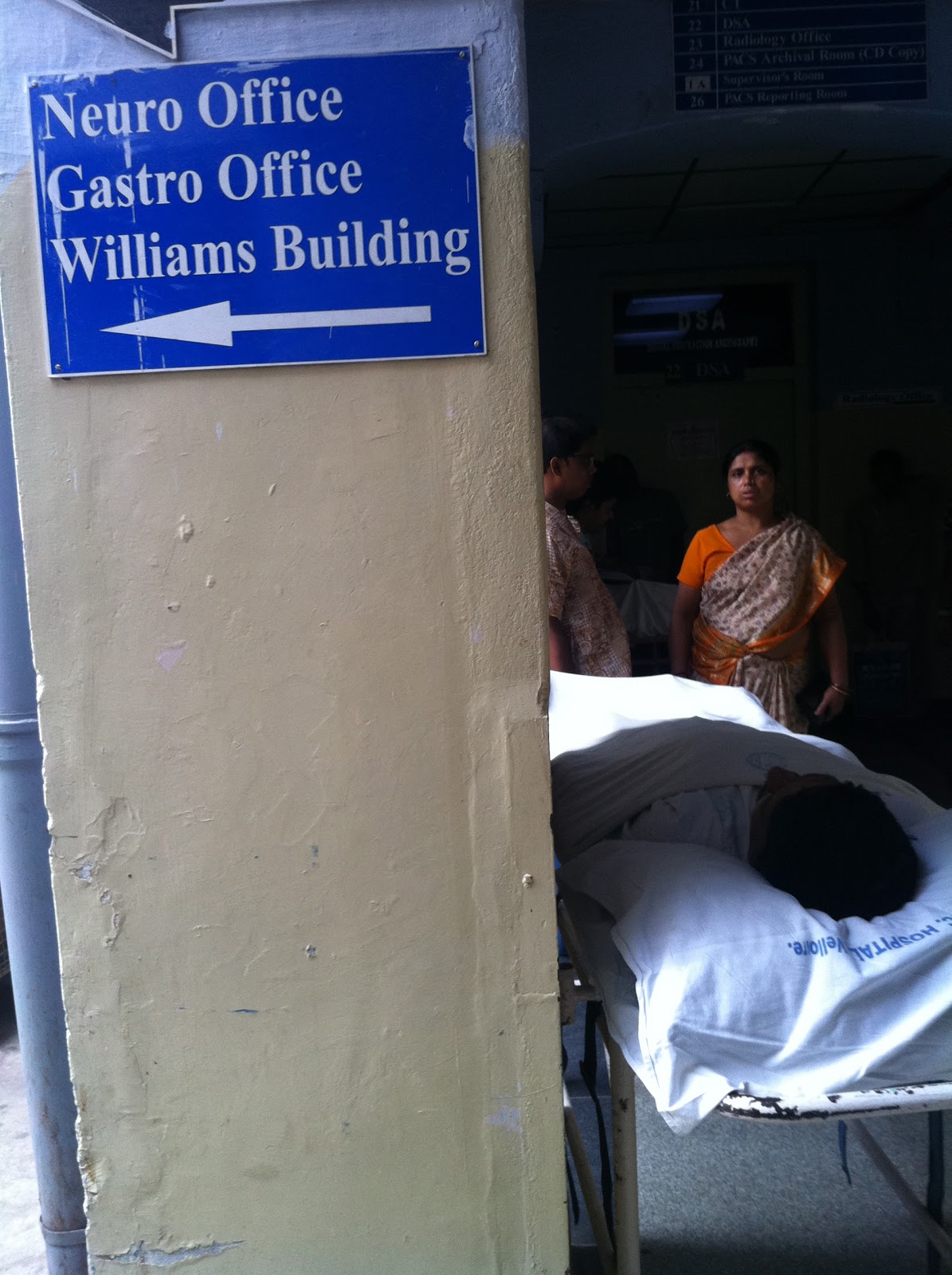
I work in Williams building and I pass poor patients like these on a daily basis.

However, just as I reached the GI unit, I felt a familiar rumble in my tummy. No, this was not the product of nasty medications or exotic enterotoxins. It was the gut wrenching realization that millions of my countrymen don’t have the economic wherewithal to travel to CMC. It was time to get to work.

------

Sorry, this blog post didn't turn out quite as well as I had hoped. I was attempting a Gogol-esque funny beginning with a ridiculously sad ending (like in "The Raincoat"). I was trying to show how my day begins with personal issues, moves on to medicine, and-- ultimately-- to public health. It gets progressively less funny because there's nothing funny about India's public health situation. Unfortunately, I couldn't quite pull it off.